Kuwait 2007 Crime & Safety Report
Crime & Safety
Middle East / N. Africa - Kuwait 11 May 2007
Overall Crime and Safety Situation: The Department of State rates Kuwait as low threat for crime. The incidence of crime in Kuwait City remains low. The Government of Kuwait (GOK) maintains a high police profile, with large numbers of uniformed and plain-clothes officers on the streets. Each district and governate have police stations operating under the direction of the Ministry of Interior (MOI) Directorate of Public Safety. Incidents of street crime do occur, and instances have been reported to the embassy’s Regional Security Office (RSO) recently that required monitoring and disseminating security notices. Of particular concern is an alarming number of incidents involving persons impersonating police officers and then assaulting victims, who are primarily third-country nationals (TCNs) and who are more susceptible to intimidation. The evolving modus operandi (MO) involves a male in plain clothes and an unmarked vehicle stopping a TCN, whether on foot or in a vehicle, asking for his ID, then demanding the person get into the impostor’s vehicle without any explanation of their offense or their destination. The TCN is then driven to a deserted area and assaulted. The British Embassy released a Warden Notice about an assault that took place in February 2007 that did not involve a British National, but occurred in the Manghaf neighborhood where a large number of British citizens reside. In this case, a TCN was taken in broad daylight from a public area by a police impostor and assaulted, employing the aforementioned MO. A second Warden Notice from the British Embassy in March detailed an incident behind U.S. Embassy Kuwait, at a shopping center in Mishref, where two young men believed to be local nationals forced a British male teenager into their vehicle late one evening and made sexual advances toward him. The victim escaped by throwing himself from the moving vehicle, where a passing Kuwaiti military vehicle offered assistance and returned him home safely. Based on a long-standing relationship of mutual cooperation and information-sharing, the Regional Security Office (RSO) at U.S. Embassy Kuwait distributed Security Notices based on the British reports advising staff of these specific instances and included personal security guidance for all employees and their family members. Violent crime is primarily confined within the TCN community, which comprises the majority of the manual labor force in Kuwait: approximately two-thirds of Kuwait’s residents. It is probable that a high percentage of crimes in the TCN community go unreported because of lack of police responsiveness. The threat of immediate deportation looms large for many of these guest workers, who generally prefer to remain below the radar of the GOK. Although several districts within Kuwait City are known to have higher incidences of crime, only one area - Jahra - remains generally off-limits to official embassy personnel. One factor contributing to the high rate of crime in Jahra is the inability of the police to enforce laws in areas where tribal customs take precedence. Known offenders regularly intimidate foreign guest workers, including ones employed by U.S. companies and U.S. military bases, by damaging vehicles, starting fires in trash cans and harassing them coming into and out from their residences. This is not due to any affiliation to the United States or U.S. military efforts; instead, it is simply because these criminals feel they can act with impunity. These gangs made up of young Bidoon men are supposed to be subject to their tribal mores first, but the tribal structure has not been effective in reigning them in, which hinders the efforts of police to crack down on their activity. Residential crime remains low. There have been no reported break-ins at any official embassy residences within the past year, nor have any vehicles been stolen. A domestic employee of an embassy employee fell victim to a purse-snatcher on a motorbike outside of the employee’s residence one afternoon last summer, but the perpetrator was captured in the same neighborhood days after the attack by police, and successfully prosecuted with assistance from the housemaid. It is not uncommon for embassy staff and dependents to report suspicious persons in their neighborhoods to the RSO, but the majority of these instances have been resolved without any criminal or other hostile intent discovered. There are no reports of petty thefts against the official American community in any of the popular outdoor markets or shopping malls frequented by tourists and westerners living in Kuwait. However, the opportunity for such crime does exist. It is understood that individuals should not assume that they can maintain a carefree attitude in these venues. Additionally, vehicle break-ins, although rare, do occur if valuables are left in plain view. Visiting Americans are urged to take the same security precautions in Kuwait that one would practice in the United States. Hotel room doors should be locked when in residence and valuables should be stored in hotel safes when available. Visitors would be wise to instruct the hotel management not to divulge their room numbers over the telephone to any callers; only to connect them to their room or to take a message. Incidents of harassment and road rage, although infrequent, do occur and appear to be on the rise. Females have reported being occasionally accosted or harassed by Arab or South Asian males, particularly while driving alone in the early morning or late night hours. Several instances have recently been brought to the attention of the RSO. These involved male drivers attempting forcefully to stop a female driver using their vehicle in the most serious scenario, or, in a less serious scenario, attempting to attract the female’s attention, most likely in an attempt to socialize (obtain a phone number or arrange a date). The new twist to this vehicular flirtation is when the male identifies himself as a police or military officer and utilizes this authority to command compliance. Of particular concern in these instances is how one determines if the person is legitimate or is indeed an impostor. In all of the reports received by the RSO, the person who initiated the action was not in any uniform and was not in a clearly marked official GOK police or military vehicle. Police do have the authority to make traffic stops while in civilian clothes and in their personal vehicles, and must identify themselves with their police ID, which has both Arabic and English written on it. The guidance we have suggested advises individuals to remain in their own vehicles with the doors locked, lowering the window only enough to receive the person’s police identification. While checking the bona fides as best as possible, use your mobile phone to alert someone of your situation and if at all possible to meet you. Tell the person you will agree only to follow him to a police station, and specify which one, keeping your mobile phone open so the person you called can hear the destination. Lastly, relay the license plate number of the person’s vehicle to your colleague on the phone if at all possible. While Kuwait is considered in many ways a progressive and tolerant country, allowing women to drive, vote and hold public office, it still remains an Islamic country where conservative customs and dress are the norm. Harassment can be reduced if visitors behave and dress conservatively and maintain a respectful demeanor and a low profile. Personnel are advised to avoid confrontations, and to move away from angry, threatening or aggressive persons, either on foot or in vehicles. Incidents of pursuit, extremely aggressive and reckless driving, and vehicle gamesmanship, in which vehicles play a form of high-speed pursuit cat and mouse on the freeways, often ends in disaster when a vehicle is forced off the road, or has a collision with another vehicle on the crowded highways. Speed is the most common factor involved in accidents in Kuwait, and it is a very common sight to pass the remnants of another horrific accident, usually in the form of a mangled car chassis, alongside the highway. Road conditions and weather are favorable most of the year in Kuwait, but drivers must remain defensive and alert to the hazards posed by others that neglect to yield in merges, cut across lanes to exit, drive aggressively and at excessive rates of speed, pass on shoulders and often operate without headlights at night. Unexploded bombs, mines, and other ordnance from the 1991 Gulf War remain present in some areas in Kuwait. U.S. Embassy Kuwait urges caution if traveling off paved surfaces outside of Kuwait City. Very recently, another incident of unexploded ordnance recently took the life of a TCN worker in the northern desert near the border checkpoint with Iraq. The man had apparently attempted to rest on a pile of rocks that was intended to mark the ordnance. Unexploded ordnance has also been discovered in piles of sand used at construction sites, including at Camp Arifjan, the largest U.S. military base in the country. Like many other embassies in the gulf region, Kuwait receives threat information indicating official and private Americans may be targeted for terrorist attacks. Soft targets such as western hotels and restaurants can be considered vulnerable to terrorist attack, although many are making improvements to their perimeter and internal security. American citizens are also advised to avoid apartment complexes where Americans or other Westerners are generally known to congregate in large numbers. We recommend that Americans maintain a low profile and vary routes and times for required travel, thus avoiding predictable schedules. Political Violence For several years after the September 2001 attacks against the World Trade Center and Pentagon, Kuwait City had experienced no major demonstrations or other related violence. During this time, Kuwait remained a strong ally to the United States, even after the U.S. military invasion into Iraq and the subsequent onset of insurgent violence began to reverberate throughout the region. In early 2006, the controversy over Danish cartoons of the Prophet Mohammed sparked several demonstrations in the country, but these remained peaceful and uneventful. However, when Israel attacked Lebanon last summer in response to two Israeli soldiers being taken hostage, several large protests occurred, including two at the U.S. Embassy, and the level of outrage and anti-American rhetoric was both surprising and unprecedented. While there were no injuries or damage during the protests, the police were not prepared for how quickly the second demonstration materialized and grew in numbers, as both manifestations numbered in the hundreds, and demonstrators burned American and Israeli flags, while brazenly waving the yellow flag of Hezbollah and chanting "Death to Israel" and "Death to America." Since events calmed in Lebanon and Israel, there have been no other major demonstrations in Kuwait City. While these events were isolated, it clearly illustrates how quickly certain events can evoke an emotional response even in a country not known for political demonstrations or violence. The primary threat to U.S. personnel in Kuwait comes from individuals with links to al-Qa'ida and regional jihadist networks. In January 2005, Kuwait police and special forces attempted to arrest members of an indigenous terrorist organization known as the Peninsula Lions. Two major gun battles occurred and both sides suffered casualties; however the majority of the group’s members have since been captured or killed. In July 2004, Kuwaiti security forces arrested up to 20 individuals who were engaged in recruitment, training and financing of local youth for terrorist operations in Iraq and Kuwait. These arrests are an indication of the development of extremist elements in Kuwait. In 2002 and 2003, individuals were able to conduct lethal attacks against U.S. military and civilian contractors in Kuwait. While there have been no lethal attacks in the last 12 months, the presence in Kuwait of large numbers of U.S. military and contractor personnel in support of Operation Iraqi Freedom continues to make Kuwait a target-rich environment. Post-specific Concerns American citizens traveling to Kuwait should be aware that possession of drugs and alcohol is illegal. Additionally, pornographic materials, weapons, and pork products are confiscated if discovered during customs checks at the airport. Luggage is X-rayed or searched by customs authorities upon entry into the country. Both women and men should dress conservatively at all times. Shorts and sleeveless shirts are discouraged from being worn in public. Throughout Kuwait the chances of getting involved with a motor vehicle accident are far greater then being a victim of a criminal or terrorist act. Simply said, driving in Kuwait is hazardous. Kuwait has excellent well-lit highways, but many Kuwaitis drive their vehicles in excess of 100 miles per hour, and weave through traffic at high rates of speed. Night driving is particularly dangerous because many drivers do not turn on their headlights. Police Response Dial 777 from any telephone to contact the emergency services. Police response to requests for assistance to American expatriates is generally good. However, switchboard operators may not speak English or do so very poorly. If possible, visitors who do not speak Arabic should request assistance from an Arabic speaker. Medical Emergencies There are many government and private medical facilities available in Kuwait. the following are hospitals that have been successfully used by official U.S. government personnel for routine and/or emergency care. Al Amiri Hospital Poison center - 241-8165/246-8537 International Clinic - 574-5111 Al-Salam Hospital - 253-3177/8/9 Mubarak Al Kabir Hospital - 531-2700 Al-Sabah Hospital - 481-5000/2000 Hadi Clinic - 531-2555 Dental Emergencies Kuwait Dental Clinic - 575-9044/45/46 Abhal Dental Specialty Center - 261-0534/8/9 Al-Fozan Dental Center - 261-9557/262-4152 Payment for Services: Americans are urged to consult with their medical insurance company prior to traveling abroad to confirm whether their policy applies overseas and whether it will cover emergency expenses such as a medical evacuation. Most hospitals and doctors accept major credit cards; otherwise, cash is accepted up front for services rendered. Patients will need to go through their insurance company to get reimbursed. Ambulance Service: Local ambulance service is available by dialing 777. Unfortunately, ambulance personnel are not trained like U.S. Emergency Medical Technicians (EMT) and they carry no life-saving equipment on board. Should you have an emergency, it is advisable to always have an understanding of where you are located. Without addresses and street names, out of the way places are difficult to find. Tips On How To Avoid Becoming a Victim Americans should maintain a low profile, vary routes and times for all travel to the extent possible, and treat mail and packages from unfamiliar sources with suspicion. All Americans are urged to be wary of unexpected visitors and to pay particular attention to suspicious vehicles. Any suspicious activities or vehicles should be reported to the RSO. The neighborhoods of Khaitan and Farwaniya, located on the outskirts of Kuwait City International Airport, are recognized and identified as high-crime areas due to criminal elements operating drug, prostitution, gambling, and black market enterprises. This area is populated by TCNs who are poorly paid. Consequently, they turn to crime to support themselves. Kuwaiti police prefer to contain these elements within this area rather then confront them directly. While violent crimes of rape, theft and murder occur in this location, they typically occur between TCNs, not Kuwaitis or Westerners. Americans are urged to avoid this area altogether, but particularly at night.
Tuesday, May 15, 2007


Monday, May 14, 2007
Taliban Commander
Commander's slaying a setback for Taliban
Mullah Dadullah is confirmed slain in a U.S.-led operation in southern Afghanistan. The insurgency has adopted many of the brutal tactics he introduced.
By M. Karim Faiez and Laura King, Special to The Times6:50 PM PDT, May 13, 2007
The Taliban movement suffered a significant setback with the death of its top operational commander, Mullah Dadullah, but the brutal tactics he pioneered probably have left a lasting imprint on the insurgency, military officials and analysts said Sunday.Dadullah, one of the senior-most Taliban figures to be killed by Western forces in more than five years of fighting, died Saturday in a U.S.-led military operation in the southern province of Helmand, U.S. and Afghan officials disclosed Sunday.Although subordinate to the movement's supreme leader, Mullah Mohammed Omar, Dadullah was considered the commander in chief of Taliban forces, in charge of day-to-day military operations.A flamboyant, one-legged figure with a penchant for casting himself in graphic Taliban recruiting videos, Dadullah had escaped death so many times that, to dispel any doubts, Afghan authorities displayed his blood-splattered corpse to reporters in the southern city of Kandahar. The body was wrapped in purple sheets and bore bullet wounds to the head and torso.Those shown the body confirmed that, like Dadullah, it was missing a left leg. They also said the face was recognizable from televised interviews Dadullah had provided, a departure from the secrecy practiced by most other senior Taliban figures.Dadullah, one of the most feared and ruthless Taliban commanders, was believed to have been the driving force behind the adoption of tactics such as suicide bombings, abductions and assassination-style killings, including beheadings — all of which increased sharply in the last year.Analysts said that even with Dadullah's death, Taliban fighters would probably press ahead with such attacks, in part because they had proved the most successful way to harry North Atlantic Treaty Organization forces and intimidate the Afghan populace."All this is part of the repertoire now, and they will not change their minds as a result of Dadullah's elimination," said Hassan Abbas, a research fellow at the Kennedy School of Government at Harvard University.Nonetheless, he and others characterized Dadullah's slaying as a milestone in the U.S.-led coalition's battle against the Taliban, whose fighters have managed to reorganize and regroup after their government was toppled in 2001.The killing of Dadullah, who was thought to be in his 40s, was announced by Said Ansari, a spokesman for Afghanistan's intelligence service, and later confirmed by NATO's International Security Assistance Force.Dadullah "will most certainly be replaced in time, but the insurgency has received a serious blow," ISAF said in a statement.Afghan security forces also took part in the operation, which was launched when Dadullah "left his sanctuary," the coalition said without providing details. Dadullah and other senior Taliban leaders were thought to have crossed freely into Pakistan, using the border-straddling tribal areas as a staging ground for attacks in Afghanistan.The presence of Taliban fighters in Pakistan is a politically explosive issue, both in the West and between the neighboring countries. Adding to tensions, Pakistani and Afghan troops Sunday engaged in a rare firefight along the border. The two sides blamed each other for starting the shooting, in which at least two Afghans were killed.Pakistani President Pervez Musharraf denies that his country has given safe haven to Afghan insurgents. But there have been strong indications that Pakistani intelligence is aware of senior Taliban commanders' comings and goings out of Pakistan's restive Waziristan region.In late February, Pakistani authorities arrested Mullah Obaidullah Akhund, the former Taliban defense minister, in the southern city of Quetta. The action coincided with a visit by Vice President Dick Cheney and came after senior Bush administration officials said Pakistan was not doing enough to rein in militant activity in the tribal areas.Dadullah's replacement, almost certain to be an ethnic Pashtun like himself, will have to win the respect of the various factions within the movement, a process that could take some months and may disrupt insurgent operations in the short term, several diplomats and military officials said.Helmand, the opium-producing heartland where Dadullah was killed, has been the scene of heavy fighting in recent weeks. NATO forces have launched a major offensive against the insurgents, but the Taliban have staged mainly hit-and-run attacks, avoiding direct battlefield confrontations when they can.Although NATO forces have been frustrated at times by their inability to flush the Taliban into the open, they have managed to track and kill some important commanders, such as Mullah Akhtar Mohammed Osmani, who was killed in an American airstrike in December.Dadullah was a veteran of mujahedin battles against invading Russians in the 1980s, a conflict that cost him his leg. He came to prominence in the 1990s and gained a reputation for military prowess, but also for almost baroque acts of cruelty.During the Taliban reign, he was said to have presided over the stoning of women accused of licentious behavior, public hangings and revenge killings encompassing entire villages. He was notorious for personally ordering the massacre of civilians from the Hazara ethnic group in the late 1990s.king@latimes.comSpecial correspondent Faiez reported from Kabul and staff writer King from Istanbul, Turkey.
Mullah Dadullah is confirmed slain in a U.S.-led operation in southern Afghanistan. The insurgency has adopted many of the brutal tactics he introduced.
By M. Karim Faiez and Laura King, Special to The Times6:50 PM PDT, May 13, 2007
The Taliban movement suffered a significant setback with the death of its top operational commander, Mullah Dadullah, but the brutal tactics he pioneered probably have left a lasting imprint on the insurgency, military officials and analysts said Sunday.Dadullah, one of the senior-most Taliban figures to be killed by Western forces in more than five years of fighting, died Saturday in a U.S.-led military operation in the southern province of Helmand, U.S. and Afghan officials disclosed Sunday.Although subordinate to the movement's supreme leader, Mullah Mohammed Omar, Dadullah was considered the commander in chief of Taliban forces, in charge of day-to-day military operations.A flamboyant, one-legged figure with a penchant for casting himself in graphic Taliban recruiting videos, Dadullah had escaped death so many times that, to dispel any doubts, Afghan authorities displayed his blood-splattered corpse to reporters in the southern city of Kandahar. The body was wrapped in purple sheets and bore bullet wounds to the head and torso.Those shown the body confirmed that, like Dadullah, it was missing a left leg. They also said the face was recognizable from televised interviews Dadullah had provided, a departure from the secrecy practiced by most other senior Taliban figures.Dadullah, one of the most feared and ruthless Taliban commanders, was believed to have been the driving force behind the adoption of tactics such as suicide bombings, abductions and assassination-style killings, including beheadings — all of which increased sharply in the last year.Analysts said that even with Dadullah's death, Taliban fighters would probably press ahead with such attacks, in part because they had proved the most successful way to harry North Atlantic Treaty Organization forces and intimidate the Afghan populace."All this is part of the repertoire now, and they will not change their minds as a result of Dadullah's elimination," said Hassan Abbas, a research fellow at the Kennedy School of Government at Harvard University.Nonetheless, he and others characterized Dadullah's slaying as a milestone in the U.S.-led coalition's battle against the Taliban, whose fighters have managed to reorganize and regroup after their government was toppled in 2001.The killing of Dadullah, who was thought to be in his 40s, was announced by Said Ansari, a spokesman for Afghanistan's intelligence service, and later confirmed by NATO's International Security Assistance Force.Dadullah "will most certainly be replaced in time, but the insurgency has received a serious blow," ISAF said in a statement.Afghan security forces also took part in the operation, which was launched when Dadullah "left his sanctuary," the coalition said without providing details. Dadullah and other senior Taliban leaders were thought to have crossed freely into Pakistan, using the border-straddling tribal areas as a staging ground for attacks in Afghanistan.The presence of Taliban fighters in Pakistan is a politically explosive issue, both in the West and between the neighboring countries. Adding to tensions, Pakistani and Afghan troops Sunday engaged in a rare firefight along the border. The two sides blamed each other for starting the shooting, in which at least two Afghans were killed.Pakistani President Pervez Musharraf denies that his country has given safe haven to Afghan insurgents. But there have been strong indications that Pakistani intelligence is aware of senior Taliban commanders' comings and goings out of Pakistan's restive Waziristan region.In late February, Pakistani authorities arrested Mullah Obaidullah Akhund, the former Taliban defense minister, in the southern city of Quetta. The action coincided with a visit by Vice President Dick Cheney and came after senior Bush administration officials said Pakistan was not doing enough to rein in militant activity in the tribal areas.Dadullah's replacement, almost certain to be an ethnic Pashtun like himself, will have to win the respect of the various factions within the movement, a process that could take some months and may disrupt insurgent operations in the short term, several diplomats and military officials said.Helmand, the opium-producing heartland where Dadullah was killed, has been the scene of heavy fighting in recent weeks. NATO forces have launched a major offensive against the insurgents, but the Taliban have staged mainly hit-and-run attacks, avoiding direct battlefield confrontations when they can.Although NATO forces have been frustrated at times by their inability to flush the Taliban into the open, they have managed to track and kill some important commanders, such as Mullah Akhtar Mohammed Osmani, who was killed in an American airstrike in December.Dadullah was a veteran of mujahedin battles against invading Russians in the 1980s, a conflict that cost him his leg. He came to prominence in the 1990s and gained a reputation for military prowess, but also for almost baroque acts of cruelty.During the Taliban reign, he was said to have presided over the stoning of women accused of licentious behavior, public hangings and revenge killings encompassing entire villages. He was notorious for personally ordering the massacre of civilians from the Hazara ethnic group in the late 1990s.king@latimes.comSpecial correspondent Faiez reported from Kabul and staff writer King from Istanbul, Turkey.
Friday, May 04, 2007
NPR : Sayyid Qutb's America
This is a must read article NPR : Sayyid Qutb's America
"Qutb's writings would later become the theoretical basis for many radical Islamic groups of today -- including al Qaeda. Qutb increasingly saw the redemption of Egypt in the application of Islamic law."
"Qutb's writings would later become the theoretical basis for many radical Islamic groups of today -- including al Qaeda. Qutb increasingly saw the redemption of Egypt in the application of Islamic law."
Thursday, May 03, 2007
Secularism
Secularism in current usage can generally be defined in two ways:
Secularism, in one sense, asserts the freedom of religion, and freedom from the government imposition of religion upon the people, within a state that is neutral on matters of belief, and gives no state privileges or subsidies to religions. (See also Separation of church and state)
Secularism, in another sense, refers to a belief that human activities and decisions, especially political ones, should be based on what it considers to be evidence and fact rather than religious influence. Where religious based doctrines directly refer to absolute truth or divine law, secular law is based upon reasonableness which was developed during the age of enlightenment. Secularists believe that all activities falling outside of the private sphere should be secular, i.e. not religious.
Secularism, in one sense, asserts the freedom of religion, and freedom from the government imposition of religion upon the people, within a state that is neutral on matters of belief, and gives no state privileges or subsidies to religions. (See also Separation of church and state)
Secularism, in another sense, refers to a belief that human activities and decisions, especially political ones, should be based on what it considers to be evidence and fact rather than religious influence. Where religious based doctrines directly refer to absolute truth or divine law, secular law is based upon reasonableness which was developed during the age of enlightenment. Secularists believe that all activities falling outside of the private sphere should be secular, i.e. not religious.
Back in the USA
So after 20 plus hours in the air with stops in London, Chicago and Tucson I am finally home. Still on Middle East time but doing ok. Great to be home again. Luggage made it here about 18 hours after I did but at least it made it.
I am really liking my iGoogle site. So nice to be net-centric and not tied to a particular computer to have access to all my bookmarks, files, photo's, etc. The Google Notebook is great and I am starting to use the calendar and word processor more. Some day all my computing services will be accesisble via the network.
I am really liking my iGoogle site. So nice to be net-centric and not tied to a particular computer to have access to all my bookmarks, files, photo's, etc. The Google Notebook is great and I am starting to use the calendar and word processor more. Some day all my computing services will be accesisble via the network.
Sunday, April 29, 2007
The Next Wild West
We have always been exploreres. In America we were always pushing west. Now we are pushing into space from Spaceport America in New Mexico. A commerical space port is being built to serve as home for companies wanting to head out into space. Check out this blog to keep up http://newspacerace.blogspot.com/ They also have a website here: http://www.spaceportamerica.com/home.html The quest to explore the unknown to be better as humans is alive in New Mexico. I wish them the best of success. This is what we are for, not killing each other.
Views of Kuwait City
the burbs....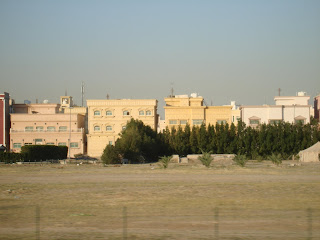

The burbs.

The road into Kuwait City, actually one of serveral. 

Construction cranes (yellow) are everywhere in Kuwait. "Skyscrapers", really just tall apartment buildings, are going up everywhere.

A small place on Gulf Road, has a good view of the blue gulf waters. The Sultan Center is the place for food and day to day needs shopping.

 The Sultan Center is the place for food and day to day needs shopping.
Saturday, April 28, 2007
Saudi Suicide Plot
Saudis Say They Broke Up Suicide Plots
172 Arrested From Al-Qaeda Cells Reportedly Planning Strikes on Oil Industry, Royal Family
By Craig Whitlock and Robin WrightWashington Post Foreign Service
Saturday, April 28, 2007; Page A12
BERLIN, April 27 -- Saudi Arabia said Friday that it had arrested 172 suspected terrorists over the past several months from a network that was planning suicide attacks -- including the use of airplanes -- on the kingdom's oil industry, military installations and other targets.
Saudi officials said some of the suspects had trained next door in Iraq and had returned to the kingdom to plot the attacks. Also among the targets were high-ranking members of the royal family and the Saudi security forces, officials said.
...and the decline of the Arab culture continues......
How many of these suicide bombing terrorists could have been astronomers or mathamaticians? Could have contributed to society. Instead we spend the vast majority of our gross national product on fighting terrorism instead of exploring space, teaching our children or any of the other postitive things we could be doing with or money, time and energy.
172 Arrested From Al-Qaeda Cells Reportedly Planning Strikes on Oil Industry, Royal Family
By Craig Whitlock and Robin WrightWashington Post Foreign Service
Saturday, April 28, 2007; Page A12
BERLIN, April 27 -- Saudi Arabia said Friday that it had arrested 172 suspected terrorists over the past several months from a network that was planning suicide attacks -- including the use of airplanes -- on the kingdom's oil industry, military installations and other targets.
Saudi officials said some of the suspects had trained next door in Iraq and had returned to the kingdom to plot the attacks. Also among the targets were high-ranking members of the royal family and the Saudi security forces, officials said.
...and the decline of the Arab culture continues......
How many of these suicide bombing terrorists could have been astronomers or mathamaticians? Could have contributed to society. Instead we spend the vast majority of our gross national product on fighting terrorism instead of exploring space, teaching our children or any of the other postitive things we could be doing with or money, time and energy.
Wednesday, April 25, 2007
Another Earth?
Exoplanets
Sister Earth
Apr 25th 2007 EARTHFrom Economist.com
Is there anybody out there?
IF EXTRATERRESTRIAL life were to exist, it would need a planet on which to evolve. All but one of 200-or-so planets outside the solar system discovered by astronomers so far would be quite unsuitable. That is because these planets are composed of gas. Yet the one whose discovery was announced in the early hours of Wednesday April 25th is different. Astronomers think it is rocky, like the Earth, and that it may harbour liquid water. This makes it the best candidate yet for supporting life.
The planet in question orbits a star called Gliese 581 that lies a mere 20 light years away in the constellation Libra. The temperature of the sun is such that it supports nuclear fusion that generates bright sunlight. By contrast, Gliese 581 is a red dwarf, so-called because the star is small and the fusion reaction proceeds slowly, creating a dim glow. Nevertheless, because the planet is much closer to its star than the Earth is to the sun, it lies in what astronomers call the "habitable zone"-the region surrounding a star where water would be liquid.
Seeing such faint objects is difficult. Astronomers used to detect them by indirect methods, such as picking up a small wobble in the position of the star that indicated it was being pulled very slightly towards an orbiting planet. New telescopes and techniques have found other exoplanets directly, by sensing a slight fading in the luminosity of the star as the planet crosses its face. But these techniques only work with massive planets and, in general, giant planets are gaseous.
Looking for planets orbiting red dwarfs is easier because the stars are less massive. This not only means that any planets orbit much more closely but also that the wobbles are more readily seen. The researchers—a team of Swiss, French and Portuguese planet-hunters using a telescope based in Chile—used an indirect method called the “radial velocity” technique. This exploits the Doppler effect familiar when a siren changes pitch as the fire engine on which it is mounted speeds past you. Using this technique, changes in the velocity of the star—that is, the wobble caused by the previously unseen planet—can be measured extremely accurately.
The planet, dubbed Gliese 581c, has a radius 50% larger than this planet. It has five times the mass of the Earth and orbits its star every 13 days. The same team of astronomers who discovered it had earlier found another planet, this time a gaseous giant similar to Neptune, orbiting the same star every 5.4 days. They say they have strong evidence for another planet in the same system that has about eight times the mass of the Earth and orbits every 84 days. The evidence is reported in a paper submitted to Astronomy and Astrophysics.
According to theory, a planet the size and mass of Gliese 581c should be rocky, like the Earth. It could, too, be covered in oceans, perhaps completely. The mean temperature on the surface of the planet would be between 0°C and 40°C, making it far more hospitable than either Venus or Mars, Earth’s nearest neighbours.
The race is now on to detect whether the planet has an atmosphere and whether it contains water. Just a fortnight ago, astronomers using the Hubble space telescope identified water vapour in the atmosphere of an exoplanet, albeit a gaseous exoplanet some 150 light years away. The planet, called HD209458b, passes in front of the Earth every three-and-a-half days, making accurate measurements possible over time.
Even if Gliese 581c turns out to be void of little green men, there is time yet. The sun is thought to be about 5 billion years old and halfway through its lifetime as a “main sequence” star. After that it is expected to become a red giant, as the hydrogen that presently comprises it is exhausted and the sun switches to burning helium instead. At that point, the Earth’s atmosphere and water will be boiled away, leaving the planet uninhabitable.
Red dwarfs, meanwhile, burn for hundreds of billions of years. This not only gives plenty of time for life to evolve on the recently discovered planet. It may make the place a useful bolthole in some 5 billion years’ time.
Sister Earth
Apr 25th 2007 EARTHFrom Economist.com
Is there anybody out there?
IF EXTRATERRESTRIAL life were to exist, it would need a planet on which to evolve. All but one of 200-or-so planets outside the solar system discovered by astronomers so far would be quite unsuitable. That is because these planets are composed of gas. Yet the one whose discovery was announced in the early hours of Wednesday April 25th is different. Astronomers think it is rocky, like the Earth, and that it may harbour liquid water. This makes it the best candidate yet for supporting life.
The planet in question orbits a star called Gliese 581 that lies a mere 20 light years away in the constellation Libra. The temperature of the sun is such that it supports nuclear fusion that generates bright sunlight. By contrast, Gliese 581 is a red dwarf, so-called because the star is small and the fusion reaction proceeds slowly, creating a dim glow. Nevertheless, because the planet is much closer to its star than the Earth is to the sun, it lies in what astronomers call the "habitable zone"-the region surrounding a star where water would be liquid.
Seeing such faint objects is difficult. Astronomers used to detect them by indirect methods, such as picking up a small wobble in the position of the star that indicated it was being pulled very slightly towards an orbiting planet. New telescopes and techniques have found other exoplanets directly, by sensing a slight fading in the luminosity of the star as the planet crosses its face. But these techniques only work with massive planets and, in general, giant planets are gaseous.
Looking for planets orbiting red dwarfs is easier because the stars are less massive. This not only means that any planets orbit much more closely but also that the wobbles are more readily seen. The researchers—a team of Swiss, French and Portuguese planet-hunters using a telescope based in Chile—used an indirect method called the “radial velocity” technique. This exploits the Doppler effect familiar when a siren changes pitch as the fire engine on which it is mounted speeds past you. Using this technique, changes in the velocity of the star—that is, the wobble caused by the previously unseen planet—can be measured extremely accurately.
The planet, dubbed Gliese 581c, has a radius 50% larger than this planet. It has five times the mass of the Earth and orbits its star every 13 days. The same team of astronomers who discovered it had earlier found another planet, this time a gaseous giant similar to Neptune, orbiting the same star every 5.4 days. They say they have strong evidence for another planet in the same system that has about eight times the mass of the Earth and orbits every 84 days. The evidence is reported in a paper submitted to Astronomy and Astrophysics.
According to theory, a planet the size and mass of Gliese 581c should be rocky, like the Earth. It could, too, be covered in oceans, perhaps completely. The mean temperature on the surface of the planet would be between 0°C and 40°C, making it far more hospitable than either Venus or Mars, Earth’s nearest neighbours.
The race is now on to detect whether the planet has an atmosphere and whether it contains water. Just a fortnight ago, astronomers using the Hubble space telescope identified water vapour in the atmosphere of an exoplanet, albeit a gaseous exoplanet some 150 light years away. The planet, called HD209458b, passes in front of the Earth every three-and-a-half days, making accurate measurements possible over time.
Even if Gliese 581c turns out to be void of little green men, there is time yet. The sun is thought to be about 5 billion years old and halfway through its lifetime as a “main sequence” star. After that it is expected to become a red giant, as the hydrogen that presently comprises it is exhausted and the sun switches to burning helium instead. At that point, the Earth’s atmosphere and water will be boiled away, leaving the planet uninhabitable.
Red dwarfs, meanwhile, burn for hundreds of billions of years. This not only gives plenty of time for life to evolve on the recently discovered planet. It may make the place a useful bolthole in some 5 billion years’ time.
House Debate on Iraq
Rep. Tim Ryan Iraq debate; D-Ohio, 17th District Youngstown, Warren, Akron. http://www.youtube.com/watch?v=M1LJD9EGOX4 See American democrocy at work.
Iraq Video slideshow
Visit YouTube to watch Ryan A. Conklin's Iraq slideshow; http://youtube.com/watch?v=rJKa-Sg9h2g to get some insights. The images are powerful.
Sunday, April 22, 2007
Charter 91
First undertaken by the Iraq Foundation in 1991, the Charter 91 project is equivalent to an Iraqi "Bill of Rights." It is a document formulated by Iraqis to express their fundamental values and aspirations for Iraq's future. It was and continues to be a signature-gathering campaign. In 1992,and again in 1994, the Iraq Foundation published multi-lingual additions of Charter 91, including Arabic, English, Kurdish, Assyrian and Turkoman texts of the Charter, as well as the names of the signatories at the time of publication. Copies of the multilingual, second edition are available from the Iraq Foundation.
Here is a link to The Iraq Foundation which has a copy: http://www.iraqfoundation.org/projects/pubs/charter91.html
How does this compare to the suggestions for what America should do in Iraq which are published in the Iraq Study Group Report (a link is in an earlier post of mine if you are interested)
Here is a link to The Iraq Foundation which has a copy: http://www.iraqfoundation.org/projects/pubs/charter91.html
How does this compare to the suggestions for what America should do in Iraq which are published in the Iraq Study Group Report (a link is in an earlier post of mine if you are interested)
Al Jazerra Blocked in Kuwait
Censorship in Kuwait. So I was doing some research on web news sources and tried to surf over to Al Jazerra, the English version. And what happens? The website is being blocked! Censorship in Kuwait, who knew? I use to get Al Jazerra, now I get "Information Alert, status: 403 Forbidden; Description: Host name recieved is not for this web site. Bull s%$# the Kuwaiti's are trying to censor what people in their country can see. What's up with that! I'll check the TV and see if they have taken it off the air also. Well just got back I can still get Al Jazerra I the English verison on my satellite TV. That does not surprise me since I also get 20 or 30 porn stations. And in a Muslim country.
News sources: www
I have the following news websites open right now; ABC News, CBS News, MSNBC News, CNN, BBC, Al Jazerra, PBS because I wanted to see what each had on their frontpage. A sampling follows from each.
ABC News - Massacre At Virgina Tech, Gunman Reportedly hit sister.., The Price of a Punch $9M, Pilot Killed in SC Blue Angel Crash, Amanda Congdon on the Tragedy.
CBS News - Pilot Killed in Blue Angel Jet Crash, Bush Passes On Jokes At Media Dinner, The World's Most Beautiful Woman?, Group Plans to Picket Va. Tech Funerals, Iraq Report Card, Tragedy at Virginia Tech, Cho Family Statement.
MSNBC - Kiling Strangers, Mass shooting on the rise, but cause hard to pinpoint, Israeli troops kill 6 Palestinians in anti-rocket raid, Prison wongly frees felon after getting phony fax, Search for Australian 'ghost ship' crew called off, Man in dungeon abuse case says sex consensual, Exclusive photos from Virginia Tech, Clift: The abortion wars and campaign 2008, Blue Angel down, NASA: Gunman feared for his job, Bush passes on jokes at D.C. roast.
Fox News - Electronic Tracks of a Killer, Blue Angels Plane Crashes, Inmate Freed with Phony Fax, NASA Gunman Feared Being Fired, Taliban Video Shows Child Executioner, Several Missing After Plan Crash Near Florida, Ex-Nuke Workeer Allegedly Took Codes to Iran.
CNN International - U.S. Navy jet crashes at air show, Police seek phone, laptop clues, Massacre at Virginia Tech, S.Korea to ship rice to North, Mortar fire kills Somali civilians, Billionaire space tourist returns.
Al Jazerra is being blocked by the Kuwait ISP. So what is it that Kuwait fears from Al Jazerra?
BBC - France set for presidential vote, The hosue that Jacques built, Violence mars Nigeria election, Seoul to resume N Korea food aid, Actor Baldwin in vociemail outburst, Loveable rogue - What kind of France will Jacques Chirac leave behind?
PBS - President Refutes Reid's Comments That Iraq War is "lost", Shooter's PUrchase of Handgunds Raises Questions About Gund Control Laws, Virginia Tech Campus, Nation Observe Day of Mourning, Military Forces in Afghanistan Combat Resurgent Taliban, War Supporters Back President's Policy Despite Low Poll Numbers.
So you decide which is the best source of information for you? One snap shot like this is not going to make up your mind but compare over time and make up your mind. For me I like PBS, BBC and CNN International.
ABC News - Massacre At Virgina Tech, Gunman Reportedly hit sister.., The Price of a Punch $9M, Pilot Killed in SC Blue Angel Crash, Amanda Congdon on the Tragedy.
CBS News - Pilot Killed in Blue Angel Jet Crash, Bush Passes On Jokes At Media Dinner, The World's Most Beautiful Woman?, Group Plans to Picket Va. Tech Funerals, Iraq Report Card, Tragedy at Virginia Tech, Cho Family Statement.
MSNBC - Kiling Strangers, Mass shooting on the rise, but cause hard to pinpoint, Israeli troops kill 6 Palestinians in anti-rocket raid, Prison wongly frees felon after getting phony fax, Search for Australian 'ghost ship' crew called off, Man in dungeon abuse case says sex consensual, Exclusive photos from Virginia Tech, Clift: The abortion wars and campaign 2008, Blue Angel down, NASA: Gunman feared for his job, Bush passes on jokes at D.C. roast.
Fox News - Electronic Tracks of a Killer, Blue Angels Plane Crashes, Inmate Freed with Phony Fax, NASA Gunman Feared Being Fired, Taliban Video Shows Child Executioner, Several Missing After Plan Crash Near Florida, Ex-Nuke Workeer Allegedly Took Codes to Iran.
CNN International - U.S. Navy jet crashes at air show, Police seek phone, laptop clues, Massacre at Virginia Tech, S.Korea to ship rice to North, Mortar fire kills Somali civilians, Billionaire space tourist returns.
Al Jazerra is being blocked by the Kuwait ISP. So what is it that Kuwait fears from Al Jazerra?
BBC - France set for presidential vote, The hosue that Jacques built, Violence mars Nigeria election, Seoul to resume N Korea food aid, Actor Baldwin in vociemail outburst, Loveable rogue - What kind of France will Jacques Chirac leave behind?
PBS - President Refutes Reid's Comments That Iraq War is "lost", Shooter's PUrchase of Handgunds Raises Questions About Gund Control Laws, Virginia Tech Campus, Nation Observe Day of Mourning, Military Forces in Afghanistan Combat Resurgent Taliban, War Supporters Back President's Policy Despite Low Poll Numbers.
So you decide which is the best source of information for you? One snap shot like this is not going to make up your mind but compare over time and make up your mind. For me I like PBS, BBC and CNN International.
Saturday, April 21, 2007
Google is a wonderful thing for those of us interested in finding knowledge in the www. I use several of the Google tools to make my online experience more productive. This blog site, a personal google homepage, notebook, and others. Try the Google tools like google trends and maps.
Thursday, April 19, 2007
News sources
The results about Fox News echo findings of previous surveys. In 2003, University of Maryland researchers studied the public’s belief in three false claims — that Iraq possessed WMD, that Iraq was involved in 9/11, and that there was international support for the U.S.-led invasion of Iraq.
The researchers stated, “The extent of Americans’ misperceptions vary significantly depending on their source of news. Those who receive most of their news from Fox News are more likely than average to have misperceptions.” Fox News viewers were “three times more likely than the next nearest network to hold all three misperceptions.”
Another interesting fact is that in the short time that the English version of Al Jazera has been available it's audiance has grown to about 1/2 that of CNN. But not a single US based cable company is offering it to American viewers. Come on get another point of view folks! Open your mind and do some research then make up your mind and take informed action.
The researchers stated, “The extent of Americans’ misperceptions vary significantly depending on their source of news. Those who receive most of their news from Fox News are more likely than average to have misperceptions.” Fox News viewers were “three times more likely than the next nearest network to hold all three misperceptions.”
Another interesting fact is that in the short time that the English version of Al Jazera has been available it's audiance has grown to about 1/2 that of CNN. But not a single US based cable company is offering it to American viewers. Come on get another point of view folks! Open your mind and do some research then make up your mind and take informed action.
Numbers 32 + 138 = crazy
So one man kills 32 people in America and several sucide bombers kill 138 in Iraq yesterday. The story of all the 32 American victims fills the airways for weeks to come with long analysis about how this could have happened. What kind of cazy person could do this. Well what kind of crazy people spend year after year killing each other in Iraq? Where is the analysis of this situation? Why are Americans fighting in Iraq? Why are Arabs killing Arabs? Religion.
Tuesday, April 17, 2007
From Astronomer to Suicide Bomber
In astronomy many words come from the Arabic people. Two examples are zenith and nadir;
Zenith - the point on the celestial sphere vertically above a given position or observer. From Arabic samt (ar-ra's), path (over the head).
Nadir- the point on the celestial sphere directly beneath a given position or observer and diametrically opposite the zenith. From Arabic naīr (as-samt),
How do you go from observing the heavens, from being some of the first astronomers to stapping explosives to your body and killing yourself and as many people as you can?
Zenith - the point on the celestial sphere vertically above a given position or observer. From Arabic samt (ar-ra's), path (over the head).
Nadir- the point on the celestial sphere directly beneath a given position or observer and diametrically opposite the zenith. From Arabic naīr (as-samt),
How do you go from observing the heavens, from being some of the first astronomers to stapping explosives to your body and killing yourself and as many people as you can?
Sunday, April 15, 2007
Topics of interest to me
I work six days a week and spend my off time studying astronomy and middle eastern history. Astronomy holds my greatest interest and the issues of cosmology are very interesting - black holes, the event horizon, big bang, string theory; all hold many interesting concepts to contemplate. On my drive to and from work I listen to astronomy pod casts from Astronomy Cast, Slaker Astronomy and a college level astronomy course. The iPod is great, I am using a mini iPod now but want to get a video iPod in a few months as more or more interesting content is becoming available, especially in the area of astronomy.
Thursday, April 12, 2007
A beautiful day
After days of the sand storm, followed by a day of raining mud we now have a beautiful day in Kuwait. Still raining but the mud is out of the air. The drive into work was not bad, as usual, since Thursday and Friday are the weekend around here. So on these day's their are fewer people on the road trying to kill me with their cars.
Wednesday, April 11, 2007
It rained mud today
Kuwait, like most 3rd world hell holes, has its interesting environmental treats. Take today for instance, it rained mud. So nice to have your car covered with mud that falls from the sky's. Of course we needed to weather a few days of dust storms to get the right conditions for our little mud drops. As usual their were several car wrecks on the drive into to work today, as every day the local drivers totally disregard the traffic laws. Law has no meaning to Kuwait drivers and the men and women are equally bad drivers. Gender equalitiy in Kuwait?
Tuesday, April 10, 2007
Ali Allawi's book
source: http://www.freerepublic.com/focus/f-news/1814064/posts
Posted on 04/08/2007 11:37:44 AM PDT by NormsRevenge
NEW YORK - In a rueful reflection on what might have been, an Iraqi government insider details in 500 pages the U.S. occupation's "shocking" mismanagement of his country — a performance so bad, he writes, that by 2007 Iraqis had "turned their backs on their would-be liberators."
"The corroded and corrupt state of Saddam was replaced by the corroded, inefficient, incompetent and corrupt state of the new order," Ali A. Allawi concludes in "The Occupation of Iraq," newly published by Yale University Press.
Allawi writes with authority as a member of that "new order," having served as Iraq's trade, defense and finance minister at various times since 2003. As a former academic, at Oxford University before the U.S.-British invasion of Iraq, he also writes with unusual detachment.
The U.S.- and British-educated engineer and financier is the first senior Iraqi official to look back at book length on his country's four-year ordeal. It's an unsparing look at failures both American and Iraqi, an account in which the word "ignorance" crops up repeatedly.
First came the "monumental ignorance" of those in Washington pushing for war in 2002 without "the faintest idea" of Iraq's realities. "More perceptive people knew instinctively that the invasion of Iraq would open up the great fissures in Iraqi society," he writes.
What followed was the "rank amateurism and swaggering arrogance" of the occupation, under L. Paul Bremer's Coalition Provisional Authority (CPA), which took big steps with little consultation with Iraqis, steps Allawi and many others see as blunders:
• The Americans disbanded Iraq's army, which Allawi said could have helped quell a rising insurgency in 2003. Instead, hundreds of thousands of demobilized, angry men became a recruiting pool for the resistance.
• Purging tens of thousands of members of toppled President Saddam Hussein's Baath party — from government, school faculties and elsewhere — left Iraq short on experienced hands at a crucial time.
• An order consolidating decentralized bank accounts at the Finance Ministry bogged down operations of Iraq's many state-owned enterprises.
• The CPA's focus on private enterprise allowed the "commercial gangs" of Saddam's day to monopolize business.
• Its free-trade policy allowed looted Iraqi capital equipment to be spirited away across borders.
• The CPA perpetuated Saddam's fuel subsidies, selling gasoline at giveaway prices and draining the budget.
Bremer, who wrote his own account of his time in Baghdad, contended his authority was undermined by "micromanagement" from Washington, where he thought officials in the administration tried "to set me up as a fall guy" for problems in Iraq.
Though U.S. generals in Iraq repeatedly asked the administration to reinstate dismissed officers from Saddam's army, Bremer recounted in his book "My Year in Iraq," they were consistently refused at the highest levels. In the end, however, senior Defense Department officials sought to distance themselves from the decision to disband the old Iraqi army, and it became "etched into America's consciousness" that it was Bremer who "had made a grave error in demobilizing the Iraqi forces," he wrote.
Although Allawi, a cousin of Ayad Allawi, Iraq's prime minister in 2004, is a member of a secularist Shiite Muslim political grouping, his well-researched book betrays little partisanship.
On U.S. reconstruction failures — in electricity, health care and other areas documented by Washington's own auditors — Allawi writes that the Americans' "insipid retelling of `success' stories" merely hid "the huge black hole that lay underneath."
For their part, U.S. officials have often largely blamed Iraq's explosive violence for the failures of reconstruction and poor governance.
The author has been instrumental since 2005 in publicizing extensive corruption within Iraq's "new order," including an $800-million Defense Ministry scandal. Under Saddam, he writes, the secret police kept would-be plunderers in check better than the U.S. occupiers have done.
As 2007 began, Allawi concludes, "America's only allies in Iraq were those who sought to manipulate the great power to their narrow advantage. It might have been otherwise."
Posted on 04/08/2007 11:37:44 AM PDT by NormsRevenge
NEW YORK - In a rueful reflection on what might have been, an Iraqi government insider details in 500 pages the U.S. occupation's "shocking" mismanagement of his country — a performance so bad, he writes, that by 2007 Iraqis had "turned their backs on their would-be liberators."
"The corroded and corrupt state of Saddam was replaced by the corroded, inefficient, incompetent and corrupt state of the new order," Ali A. Allawi concludes in "The Occupation of Iraq," newly published by Yale University Press.
Allawi writes with authority as a member of that "new order," having served as Iraq's trade, defense and finance minister at various times since 2003. As a former academic, at Oxford University before the U.S.-British invasion of Iraq, he also writes with unusual detachment.
The U.S.- and British-educated engineer and financier is the first senior Iraqi official to look back at book length on his country's four-year ordeal. It's an unsparing look at failures both American and Iraqi, an account in which the word "ignorance" crops up repeatedly.
First came the "monumental ignorance" of those in Washington pushing for war in 2002 without "the faintest idea" of Iraq's realities. "More perceptive people knew instinctively that the invasion of Iraq would open up the great fissures in Iraqi society," he writes.
What followed was the "rank amateurism and swaggering arrogance" of the occupation, under L. Paul Bremer's Coalition Provisional Authority (CPA), which took big steps with little consultation with Iraqis, steps Allawi and many others see as blunders:
• The Americans disbanded Iraq's army, which Allawi said could have helped quell a rising insurgency in 2003. Instead, hundreds of thousands of demobilized, angry men became a recruiting pool for the resistance.
• Purging tens of thousands of members of toppled President Saddam Hussein's Baath party — from government, school faculties and elsewhere — left Iraq short on experienced hands at a crucial time.
• An order consolidating decentralized bank accounts at the Finance Ministry bogged down operations of Iraq's many state-owned enterprises.
• The CPA's focus on private enterprise allowed the "commercial gangs" of Saddam's day to monopolize business.
• Its free-trade policy allowed looted Iraqi capital equipment to be spirited away across borders.
• The CPA perpetuated Saddam's fuel subsidies, selling gasoline at giveaway prices and draining the budget.
Bremer, who wrote his own account of his time in Baghdad, contended his authority was undermined by "micromanagement" from Washington, where he thought officials in the administration tried "to set me up as a fall guy" for problems in Iraq.
Though U.S. generals in Iraq repeatedly asked the administration to reinstate dismissed officers from Saddam's army, Bremer recounted in his book "My Year in Iraq," they were consistently refused at the highest levels. In the end, however, senior Defense Department officials sought to distance themselves from the decision to disband the old Iraqi army, and it became "etched into America's consciousness" that it was Bremer who "had made a grave error in demobilizing the Iraqi forces," he wrote.
Although Allawi, a cousin of Ayad Allawi, Iraq's prime minister in 2004, is a member of a secularist Shiite Muslim political grouping, his well-researched book betrays little partisanship.
On U.S. reconstruction failures — in electricity, health care and other areas documented by Washington's own auditors — Allawi writes that the Americans' "insipid retelling of `success' stories" merely hid "the huge black hole that lay underneath."
For their part, U.S. officials have often largely blamed Iraq's explosive violence for the failures of reconstruction and poor governance.
The author has been instrumental since 2005 in publicizing extensive corruption within Iraq's "new order," including an $800-million Defense Ministry scandal. Under Saddam, he writes, the secret police kept would-be plunderers in check better than the U.S. occupiers have done.
As 2007 began, Allawi concludes, "America's only allies in Iraq were those who sought to manipulate the great power to their narrow advantage. It might have been otherwise."
Monday, April 09, 2007

Sunday, April 08, 2007
Knowledge
When rational people have complete knowledge of a situation they can make better decisions. Of course not all people are rational. But knowledge is available for the seeker. Just google any subject or visit wikipedia. One problem we humans have is waiting to gather and analyze knowledge before we act. If our decision makers had complete knowledge would I be here in Kuwait? Would Iran have captured the British sailors? Would America be in Iraq and Afghanistan? I wonder. And I continue to seek complete knowledge.
Sunday, April 01, 2007
Astronomy
The Arabs were astronomers and contribued to the science of astronomy. Their is a great podcast from Astronomy Cast (http://www.astronomycast.com) that talks not only about intersting astronomy subjects but talks about how we know what we know. It is very interesting to understand how we know what we know. This looking back to how we know what we know is something we should do in all areas of knowledge. You can also subscribe to the Astronomy pod cast by going to iTunes and searching for "Astronomy Cast"
Sunday, March 25, 2007


Sanctions against Iran
UNITED NATIONS, March 24 (KUNA) -- The Security Council on Saturday adopted further sanctions against Iran to pressure it to comply with UN demands to suspend its uranium enrichment activities, and warned it would impose tighter measures in 60 days if the IAEA reports that Tehran is still in defiance. ...
and what good will this do? Looks like war will expand from Iraq into Iran. History repeats itself but this time the American tax payer foots the bill. I need to head for home before this whole place goes up. That is if I can survive the freeways of Kuwait where the worst drivers in the world battle it out daily while talking on their cell phones.
and what good will this do? Looks like war will expand from Iraq into Iran. History repeats itself but this time the American tax payer foots the bill. I need to head for home before this whole place goes up. That is if I can survive the freeways of Kuwait where the worst drivers in the world battle it out daily while talking on their cell phones.
Friday, March 23, 2007
Iran
So the big winner in the war between the US and Iraq is Iran. This should be no surprise to President Bush but I except that it is. Iran gets bolder every day. From thier nuclear program to the recent capture of UK personel today in the Gulf. A long history of Muslims waring against Muslims continues, at least this time it is Arab against Persian.
Saturday, March 17, 2007
Good Book - Afghanistan
I just finished reading "The Places in Between" by Rory Stewart. It is a book about the authors walk across Afghanistan, from Herat to Kabul. A very good book that I can recommend to those interested in the life and history of people in Aghanistan. The authur begins his walk across Afghanistan just after the Taliban are removed from power in 2002, note they are trying to regain that power back now. An easy read and gives good insights into the daily lives of the locals. The Islamic tradition of support to the traveler is impressive. I wonder how many other people would take you in if you were walking across thier country and knocked on the door at night and asked for food and a place to sleep.
Trip to Qatar
So I just returned from a trip to Qatar, a small country jutting out into the Persian/Arabian Gulf. Lots of construction going on, roads and new buildings. On the flight down we took a small plane which was great since we flew at around 10,000 feet which gave us a great view of the Gulf waters and coast line. Very beautiful. Bahrain is very impressive from the air from all the building going on. On the day we were scheduled to return their was a huge sand storm which grounded all planes for about 12 hours but we finally took off and made it back to Kuwait in the late evening. So now I have had the opportunity to visit Oman, Qatar, Bahrain and Kuwait.
Sunday, March 04, 2007
Kuwait "drivers"
So I am back on my rant about Kuwaiti drivers. Having to drive on the freeway everyday I see more crazy drivers in a single day than I have in years in the US or any other county I have been to. They are inconsiderate and rude, endangering the lives of all who must drive. A typtical third world country, no driving schools must exist here, or at least no one attends them. Flashing lights so you get out of the way. Riding your rear bumber and making eradic lane changes or driving on the shoulder or in between the marked lanes. Traffic laws are not enforced, at least not on the local's. Driving with no lights at night. Talking on their phones or just talking to the person in the car with them and not paying any attention to the road ahead. Hope I survive the roads of Kuwait.
Wednesday, February 07, 2007
Still Here
Just a short post to let you know that I am still alive. Not feeling very well but will be leaving Bahrain tomorrow to fly back to Kuwait. Another day closer to going home.
Saturday, January 20, 2007
Kuwati Gulf Cats
From time to time I walk along the Arabian Gulf, since my apartment is only a block from it. As I walk some 30-50 cats usally can be seen sunning themselves, searching for food in the rocks and trash cans, cleaning themshelves and just walking along the beach with me. The cats look to be in very good health and well feed. There are lots of calico and tiger stripped cats. Somehow they make me feel safe.
Tuesday, January 16, 2007
Iraq Study Group Recommendations
I have posted a link to the Iraq Sutdy Group Recommendations in an earlier post on this site. I have read them all and the study group report by James Baker and Lee Hamilton. My two cents is that the US needs to begin the withdrawal soon. We should provide logistics support, training, etc and most important we need to step up our diplomatic efforts. We need to stay the course from a diplomatic perspective, this is a long term project President Bush got us into but it is time to move most of the troops out and focus on a support role to the Iraqi government and miltiary.
Monday, January 15, 2007
From the White House
Fact Sheet: The New Way Forward in Iraq
The President's New Iraq Strategy Is Rooted In Six Fundamental Elements:
Let the Iraqis lead;
Help Iraqis protect the population;
Isolate extremists;
Create space for political progress;
Diversify political and economic efforts; and
Situate the strategy in a regional approach.
Iraq Could Not Be Graver – The War On Terror Cannot Be Won If We Fail In Iraq. Our enemies throughout the Middle East are trying to defeat us in Iraq. If we step back now, the problems in Iraq will become more lethal, and make our troops fight an uglier battle than we are seeing today.
Key Elements Of The New Approach: Security
Iraqi:
Publicly acknowledge all parties are responsible for quelling sectarian violence.
Work with additional Coalition help to regain control of the capital and protect the Iraqi population.
Deliver necessary Iraqi forces for Baghdad and protect those forces from political interference.
Commit to intensify efforts to build balanced security forces throughout the nation that provide security even-handedly for all Iraqis.
Plan and fund eventual demobilization program for militias.
Coalition:
Agree that helping Iraqis to provide population security is necessary to enable accelerated transition and political progress.
Provide additional military and civilian resources to accomplish this mission.
Increase efforts to support tribes willing to help Iraqis fight Al Qaeda in Anbar.
Accelerate and expand the embed program while minimizing risk to participants.
Both Coalition And Iraqi:
Continue counter-terror operations against Al Qaeda and insurgent organizations.
Take more vigorous action against death squad networks.
Accelerate transition to Iraqi responsibility and increase Iraqi ownership.
Increase Iraqi security force capacity – both size and effectiveness – from 10 to 13 Army divisions, 36 to 41 Army Brigades, and 112 to 132 Army Battalions.
Establish a National Operations Center, National Counterterrorism Force, and National Strike Force.
Reform the Ministry of Interior to increase transparency and accountability and transform the National Police.
Key Elements Of The New Approach: Political
Iraqi:
The Government of Iraq commits to:
Reform its cabinet to provide even-handed service delivery.
Act on promised reconciliation initiatives (oil law, de-Baathification law, Provincial elections).
Give Coalition and ISF authority to pursue ALL extremists.
All Iraqi leaders support reconciliation.
Moderate coalition emerges as strong base of support for unity government.
Coalition:
Support political moderates so they can take on the extremists.
Build and sustain strategic partnerships with moderate Shi'a, Sunnis, and Kurds.
Support the national compact and key elements of reconciliation with Iraqis in the lead.
Diversify U.S. efforts to foster political accommodation outside Baghdad (more flexibility for local commanders and civilian leaders).
Expand and increase the flexibility of the Provincial Reconstruction Team (PRT) footprint.
Focus U.S. political, security, and economic resources at local level to open space for moderates, with initial priority to Baghdad and Anbar.
Both Coalition And Iraqi:
Partnership between Prime Minister Maliki, Iraqi moderates, and the United States where all parties are clear on expectations and responsibilities.
Strengthen the rule of law and combat corruption.
Build on security gains to foster local and national political accommodations.
Make Iraqi institutions even-handed, serving all of Iraq's communities on an impartial basis.
Key Elements Of The New Approach: Economic
Iraqi:
Deliver economic resources and provide essential services to all areas and communities.
Enact hydrocarbons law to promote investment, national unity, and reconciliation.
Capitalize and execute jobs-producing programs.
Match U.S. efforts to create jobs with longer term sustainable Iraqi programs.
Focus more economic effort on relatively secure areas as a magnet for employment and growth.
Coalition:
Refocus efforts to help Iraqis build capacity in areas vital to success of the government (e.g. budget execution, key ministries).
Decentralize efforts to build Iraqi capacities outside the Green Zone.
Double the number of PRTs and civilians serving outside the Green Zone.
Establish PRT-capability within maneuver Brigade Combat Teams (BCTs).
Greater integration of economic strategy with military effort.
Joint civil-military plans devised by PRT and BCT.
Remove legal and bureaucratic barriers to maximize cooperation and flexibility.
Key Elements Of The New Approach: Regional
Iraqi:
Vigorously engage Arab states.
Take the lead in establishing a regional forum to give support and help from the neighborhood.
Counter negative foreign activity in Iraq.
Increase efforts to counter PKK (Kurdistan Workers' Party).
Coalition:
Intensify efforts to counter Iranian and Syrian influence inside Iraq.
Increase military presence in the region.
Strengthen defense ties with partner states in the region.
Encourage Arab state support to Government of Iraq.
Continue efforts to help manage relations between Iraq and Turkey.
Continue to seek the region's full support in the War on Terror.
Both Coalition And Iraqi:
Focus on the International Compact.
Retain active U.N. engagement in Iraq – particularly for election support and constitutional review.
The President's New Iraq Strategy Is Rooted In Six Fundamental Elements:
Let the Iraqis lead;
Help Iraqis protect the population;
Isolate extremists;
Create space for political progress;
Diversify political and economic efforts; and
Situate the strategy in a regional approach.
Iraq Could Not Be Graver – The War On Terror Cannot Be Won If We Fail In Iraq. Our enemies throughout the Middle East are trying to defeat us in Iraq. If we step back now, the problems in Iraq will become more lethal, and make our troops fight an uglier battle than we are seeing today.
Key Elements Of The New Approach: Security
Iraqi:
Publicly acknowledge all parties are responsible for quelling sectarian violence.
Work with additional Coalition help to regain control of the capital and protect the Iraqi population.
Deliver necessary Iraqi forces for Baghdad and protect those forces from political interference.
Commit to intensify efforts to build balanced security forces throughout the nation that provide security even-handedly for all Iraqis.
Plan and fund eventual demobilization program for militias.
Coalition:
Agree that helping Iraqis to provide population security is necessary to enable accelerated transition and political progress.
Provide additional military and civilian resources to accomplish this mission.
Increase efforts to support tribes willing to help Iraqis fight Al Qaeda in Anbar.
Accelerate and expand the embed program while minimizing risk to participants.
Both Coalition And Iraqi:
Continue counter-terror operations against Al Qaeda and insurgent organizations.
Take more vigorous action against death squad networks.
Accelerate transition to Iraqi responsibility and increase Iraqi ownership.
Increase Iraqi security force capacity – both size and effectiveness – from 10 to 13 Army divisions, 36 to 41 Army Brigades, and 112 to 132 Army Battalions.
Establish a National Operations Center, National Counterterrorism Force, and National Strike Force.
Reform the Ministry of Interior to increase transparency and accountability and transform the National Police.
Key Elements Of The New Approach: Political
Iraqi:
The Government of Iraq commits to:
Reform its cabinet to provide even-handed service delivery.
Act on promised reconciliation initiatives (oil law, de-Baathification law, Provincial elections).
Give Coalition and ISF authority to pursue ALL extremists.
All Iraqi leaders support reconciliation.
Moderate coalition emerges as strong base of support for unity government.
Coalition:
Support political moderates so they can take on the extremists.
Build and sustain strategic partnerships with moderate Shi'a, Sunnis, and Kurds.
Support the national compact and key elements of reconciliation with Iraqis in the lead.
Diversify U.S. efforts to foster political accommodation outside Baghdad (more flexibility for local commanders and civilian leaders).
Expand and increase the flexibility of the Provincial Reconstruction Team (PRT) footprint.
Focus U.S. political, security, and economic resources at local level to open space for moderates, with initial priority to Baghdad and Anbar.
Both Coalition And Iraqi:
Partnership between Prime Minister Maliki, Iraqi moderates, and the United States where all parties are clear on expectations and responsibilities.
Strengthen the rule of law and combat corruption.
Build on security gains to foster local and national political accommodations.
Make Iraqi institutions even-handed, serving all of Iraq's communities on an impartial basis.
Key Elements Of The New Approach: Economic
Iraqi:
Deliver economic resources and provide essential services to all areas and communities.
Enact hydrocarbons law to promote investment, national unity, and reconciliation.
Capitalize and execute jobs-producing programs.
Match U.S. efforts to create jobs with longer term sustainable Iraqi programs.
Focus more economic effort on relatively secure areas as a magnet for employment and growth.
Coalition:
Refocus efforts to help Iraqis build capacity in areas vital to success of the government (e.g. budget execution, key ministries).
Decentralize efforts to build Iraqi capacities outside the Green Zone.
Double the number of PRTs and civilians serving outside the Green Zone.
Establish PRT-capability within maneuver Brigade Combat Teams (BCTs).
Greater integration of economic strategy with military effort.
Joint civil-military plans devised by PRT and BCT.
Remove legal and bureaucratic barriers to maximize cooperation and flexibility.
Key Elements Of The New Approach: Regional
Iraqi:
Vigorously engage Arab states.
Take the lead in establishing a regional forum to give support and help from the neighborhood.
Counter negative foreign activity in Iraq.
Increase efforts to counter PKK (Kurdistan Workers' Party).
Coalition:
Intensify efforts to counter Iranian and Syrian influence inside Iraq.
Increase military presence in the region.
Strengthen defense ties with partner states in the region.
Encourage Arab state support to Government of Iraq.
Continue efforts to help manage relations between Iraq and Turkey.
Continue to seek the region's full support in the War on Terror.
Both Coalition And Iraqi:
Focus on the International Compact.
Retain active U.N. engagement in Iraq – particularly for election support and constitutional review.
Saturday, January 13, 2007
Return to Kuwait
So I am still suffering from jet lag. Returned to Kuwait yesterday from back home. About 16 hours of flight time, 6 hours of layover and two airplanes and I'm back. Ofcourse I found out today that I will be heading off to Bahrain in a little over a week. No rest for the weary.
I started another Great Course today titled "The United States and the Middle East - 1914 to 9/11" which is very interesting. But one of the books I am reading now about the Middle East, "A Peace to End All Peace" tells the story of how the current configuration of the Middle East was mainly determined from 1914 to 1922 as a result of the British, French and Russian plans carried out during that period as result of the fall of the Ottoman Empire.
On the plane I began reading the Iraq Study Group Report which has some interesting and very relavant recommendations for the future of Iraq and the Middle East in general. The more I learn about the Middle East the more interesting it becomes and the more the daily news makes sense to me.
I started another Great Course today titled "The United States and the Middle East - 1914 to 9/11" which is very interesting. But one of the books I am reading now about the Middle East, "A Peace to End All Peace" tells the story of how the current configuration of the Middle East was mainly determined from 1914 to 1922 as a result of the British, French and Russian plans carried out during that period as result of the fall of the Ottoman Empire.
On the plane I began reading the Iraq Study Group Report which has some interesting and very relavant recommendations for the future of Iraq and the Middle East in general. The more I learn about the Middle East the more interesting it becomes and the more the daily news makes sense to me.
Monday, January 08, 2007
Al Warka Google Map
Al Warka' google map Great map of Uruk (aka Al Warka) that you can zoom in on to see where Uruk is in Iraq.
Uruk Background
Check here for some more info on Uruk to include some photos of the ancient Sumer site - http://ancientneareast.tripod.com/Sumer.html
Uruk now Warka
"In the Early Dynastic I period the city of Uruk covered an area of 400 hectares and was surrounded by a city wall, which according to later accounts was built by Gilgamesh, Uruk's legendary king. Uruk remained an important religious center and its shrines were embellished by many of the later rulers of Mesopotamia.....The modern name of Uruk is Warka and it was recorded in the Bible as the town of Erech. In the Sumerian period it was called Unu..." Source http://www.mystae.com/restricted/streams/vela/uruk.html
Saturday, January 06, 2007
Uruk, Mesopotamia
In the 5th Millennium B.C. the city of Uruk, 140 miles south of Baghdad was in fact the first city. Uruk's people where the first to live the urban lifestyle. Uruk was the first city think of that. The first time in human history that people come together and cooperated so that larger numbers of us could live side by side. Where one persons skills made it possible for anothr person to build specialized skills in another area. What happened over time so that now we want to kill each other rather than work together and build better cities?
Tuesday, January 02, 2007
Empathy
What makes us human? The ability to feel empathy for another human begin. To see life from the other persons perspective. What if we all took some time to see the world from the other persons point of view? To understand their world view. World views can be based on fact or faith, each valid, each resulting in very different perspectives. Each leading to very different courses of action. What makes us human? Empathy is on attribute to consider.
Monday, January 01, 2007
The Levant Region

The Levant is an imprecise geographical term historically referring to a large area in the Middle East south of the Taurus Mountains, bounded by the Mediterranean Sea on the west, and by the northern Arabian Desert and Upper Mesopotamia to the east. The Levant does not include the Caucasus Mountains, any part of the Arabian Peninsula proper, or Anatolia — although at times Cilicia may be included. The Sinai Peninsula may also be included, but may be excluded as a marginal area forming a land bridge between the Levant and northern Egypt. At times Levantine cultures and peoples dominated the region between the Sinai and the Nile river, but that region is usually excluded from the geographical Levant.
What Makes Us Human?
What makes us human? Philosophers have been asking this question for thousands of years. Written and spoken language, tool making and other capabilities have been offered as answers to this question, what makes us human? Recently evolutionary biologists have found a gene which seems to have evolved about 6,000 years ago, again we are back to the Fertile Cresent area. This gene seems to be responsible for our large brains and its growth. We all know that as a percentage of body mass humans have a large brain to body ratio. So all of this leads me back to what I have been saying for a long time, lets focus on what makes us the same, what makes us human, not on what makes us different. So what makes us human?

Sunday, December 31, 2006
Value Truth
We should all value truth above all else. How do we know what is true? By being informed and going to the source, which is made possible via the world wide web. Seek truth and think about what it means to you and your fellow humans. My hope for 2007 is that more people seek truth and think.
Saturday, December 30, 2006
Baghdad - City of Peace
During the reign of the Abbasid caliph, Abu Jafar al-Mansur (A.D. 754-775), the dynasty established itself by building a new capital city and separaating from radical groups that had helped in the revolution. On the site of a small town near the ancient Mesopotamian city of Babylon, al-Masur erected his new capital, the "City of Peace," Baghdad.
Friday, December 08, 2006
Iraq Study Group Report
Here is a link to the Iraq Study Group Report; http://www.usip.org/isg/iraq_study_group_report/report/1206/index.html
Go to the source for your news. Read the report and make up your own mind. Or listen to CNN or Al Jazerra and let them tell you what to think.
Go to the source for your news. Read the report and make up your own mind. Or listen to CNN or Al Jazerra and let them tell you what to think.
Thursday, December 07, 2006

Wednesday, December 06, 2006
Maybe in 75 years
Maybe in 75 years you should come to Kuwait for a visit. Essentially Kuwait City is one large construction site. Buildings are going up everywhere you cast your eyes. Of course what your eyes will see mostly is the construction trash, heaps of junk, piles of sand and just general trash blowing in the wind. The building construction standards are from the early 1800's I'd say. No such thing as safety is practiced. The construction sites are places where I suspect many foriegn workers have died. But I do not think any Kuwait local would know or care about that. Infrastructure services like water, gas and electricity are very crude. Gas for apartments and homes is in portable canisters, like I use at home under the BBQ. Of course you would not want to have gas pipes run within the buildings, can you say death trap? So I was thinking that in 75 years you could come and visit since they may be done with most of the construction, but based on the way they drive I would say wait for a 100 years. In that time perhaps the younger generation will have learned how to drive, their parents sure can not drive safely. The freeways are death traps, but I'll save that for another post.
Monday, December 04, 2006
Rumsfeld's Memo - Iraq Options
December 3, 2006
Rumsfeld’s Memo of Options for Iraq War
Following is the text of a classified Nov. 6 memorandum that Defense Secretary Donald H. Rumsfeld sent to the White House suggesting new options in Iraq. The memorandum was sent one day before the midterm Congressional elections and two days before Mr. Rumsfeld resigned.
Nov. 6, 2006
SUBJECT: Iraq — Illustrative New Courses of Action
The situation in Iraq has been evolving, and U.S. forces have adjusted, over time, from major combat operations to counterterrorism, to counterinsurgency, to dealing with death squads and sectarian violence. In my view it is time for a major adjustment. Clearly, what U.S. forces are currently doing in Iraq is not working well enough or fast enough. Following is a range of options:
ILLUSTRATIVE OPTIONS
Above the Line: (Many of these options could and, in a number of cases, should be done in combination with others)
Publicly announce a set of benchmarks agreed to by the Iraqi Government and the U.S. — political, economic and security goals — to chart a path ahead for the Iraqi government and Iraqi people (to get them moving) and for the U.S. public (to reassure them that progress can and is being made).
Significantly increase U.S. trainers and embeds, and transfer more U.S. equipment to Iraqi Security forces (ISF), to further accelerate their capabilities by refocusing the assignment of some significant portion of the U.S. troops currently in Iraq.
Initiate a reverse embeds program, like the Korean Katusas, by putting one or more Iraqi soldiers with every U.S. and possibly Coalition squad, to improve our units’ language capabilities and cultural awareness and to give the Iraqis experience and training with professional U.S. troops.
Aggressively beef up the Iraqi MOD and MOI, and other Iraqi ministries critical to the success of the ISF — the Iraqi Ministries of Finance, Planning, Health, Criminal Justice, Prisons, etc. — by reaching out to U.S. military retirees and Reserve/National Guard volunteers (i.e., give up on trying to get other USG Departments to do it.)
Conduct an accelerated draw-down of U.S. bases. We have already reduced from 110 to 55 bases. Plan to get down to 10 to 15 bases by April 2007, and to 5 bases by July 2007.
Retain high-end SOF capability and necessary support structure to target Al Qaeda, death squads, and Iranians in Iraq, while drawing down all other Coalition forces, except those necessary to provide certain key enablers for the ISF.
Initiate an approach where U.S. forces provide security only for those provinces or cities that openly request U.S. help and that actively cooperate, with the stipulation being that unless they cooperate fully, U.S. forces would leave their province.
Stop rewarding bad behavior, as was done in Fallujah when they pushed in reconstruction funds, and start rewarding good behavior. Put our reconstruction efforts in those parts of Iraq that are behaving, and invest and create havens of opportunity to reward them for their good behavior. As the old saying goes, “If you want more of something, reward it; if you want less of something, penalize it.” No more reconstruction assistance in areas where there is violence.
Position substantial U.S. forces near the Iranian and Syrian borders to reduce infiltration and, importantly, reduce Iranian influence on the Iraqi Government.
Withdraw U.S. forces from vulnerable positions — cities, patrolling, etc. — and move U.S. forces to a Quick Reaction Force (QRF) status, operating from within Iraq and Kuwait, to be available when Iraqi security forces need assistance.
Begin modest withdrawals of U.S. and Coalition forces (start “taking our hand off the bicycle seat”), so Iraqis know they have to pull up their socks, step up and take responsibility for their country.
Provide money to key political and religious leaders (as Saddam Hussein did), to get them to help us get through this difficult period.
Initiate a massive program for unemployed youth. It would have to be run by U.S. forces, since no other organization could do it.
Announce that whatever new approach the U.S. decides on, the U.S. is doing so on a trial basis. This will give us the ability to readjust and move to another course, if necessary, and therefore not “lose.”
Recast the U.S. military mission and the U.S. goals (how we talk about them) — go minimalist.
Below the Line (less attractive options):
Continue on the current path.
Move a large fraction of all U.S. Forces into Baghdad to attempt to control it.
Increase Brigade Combat Teams and U.S. forces in Iraq substantially.
Set a firm withdrawal date to leave. Declare that with Saddam gone and Iraq a sovereign nation, the Iraqi people can govern themselves. Tell Iran and Syria to stay out.
Assist in accelerating an aggressive federalism plan, moving towards three separate states — Sunni, Shia, and Kurd.
Try a Dayton-like process.
Rumsfeld’s Memo of Options for Iraq War
Following is the text of a classified Nov. 6 memorandum that Defense Secretary Donald H. Rumsfeld sent to the White House suggesting new options in Iraq. The memorandum was sent one day before the midterm Congressional elections and two days before Mr. Rumsfeld resigned.
Nov. 6, 2006
SUBJECT: Iraq — Illustrative New Courses of Action
The situation in Iraq has been evolving, and U.S. forces have adjusted, over time, from major combat operations to counterterrorism, to counterinsurgency, to dealing with death squads and sectarian violence. In my view it is time for a major adjustment. Clearly, what U.S. forces are currently doing in Iraq is not working well enough or fast enough. Following is a range of options:
ILLUSTRATIVE OPTIONS
Above the Line: (Many of these options could and, in a number of cases, should be done in combination with others)
Publicly announce a set of benchmarks agreed to by the Iraqi Government and the U.S. — political, economic and security goals — to chart a path ahead for the Iraqi government and Iraqi people (to get them moving) and for the U.S. public (to reassure them that progress can and is being made).
Significantly increase U.S. trainers and embeds, and transfer more U.S. equipment to Iraqi Security forces (ISF), to further accelerate their capabilities by refocusing the assignment of some significant portion of the U.S. troops currently in Iraq.
Initiate a reverse embeds program, like the Korean Katusas, by putting one or more Iraqi soldiers with every U.S. and possibly Coalition squad, to improve our units’ language capabilities and cultural awareness and to give the Iraqis experience and training with professional U.S. troops.
Aggressively beef up the Iraqi MOD and MOI, and other Iraqi ministries critical to the success of the ISF — the Iraqi Ministries of Finance, Planning, Health, Criminal Justice, Prisons, etc. — by reaching out to U.S. military retirees and Reserve/National Guard volunteers (i.e., give up on trying to get other USG Departments to do it.)
Conduct an accelerated draw-down of U.S. bases. We have already reduced from 110 to 55 bases. Plan to get down to 10 to 15 bases by April 2007, and to 5 bases by July 2007.
Retain high-end SOF capability and necessary support structure to target Al Qaeda, death squads, and Iranians in Iraq, while drawing down all other Coalition forces, except those necessary to provide certain key enablers for the ISF.
Initiate an approach where U.S. forces provide security only for those provinces or cities that openly request U.S. help and that actively cooperate, with the stipulation being that unless they cooperate fully, U.S. forces would leave their province.
Stop rewarding bad behavior, as was done in Fallujah when they pushed in reconstruction funds, and start rewarding good behavior. Put our reconstruction efforts in those parts of Iraq that are behaving, and invest and create havens of opportunity to reward them for their good behavior. As the old saying goes, “If you want more of something, reward it; if you want less of something, penalize it.” No more reconstruction assistance in areas where there is violence.
Position substantial U.S. forces near the Iranian and Syrian borders to reduce infiltration and, importantly, reduce Iranian influence on the Iraqi Government.
Withdraw U.S. forces from vulnerable positions — cities, patrolling, etc. — and move U.S. forces to a Quick Reaction Force (QRF) status, operating from within Iraq and Kuwait, to be available when Iraqi security forces need assistance.
Begin modest withdrawals of U.S. and Coalition forces (start “taking our hand off the bicycle seat”), so Iraqis know they have to pull up their socks, step up and take responsibility for their country.
Provide money to key political and religious leaders (as Saddam Hussein did), to get them to help us get through this difficult period.
Initiate a massive program for unemployed youth. It would have to be run by U.S. forces, since no other organization could do it.
Announce that whatever new approach the U.S. decides on, the U.S. is doing so on a trial basis. This will give us the ability to readjust and move to another course, if necessary, and therefore not “lose.”
Recast the U.S. military mission and the U.S. goals (how we talk about them) — go minimalist.
Below the Line (less attractive options):
Continue on the current path.
Move a large fraction of all U.S. Forces into Baghdad to attempt to control it.
Increase Brigade Combat Teams and U.S. forces in Iraq substantially.
Set a firm withdrawal date to leave. Declare that with Saddam gone and Iraq a sovereign nation, the Iraqi people can govern themselves. Tell Iran and Syria to stay out.
Assist in accelerating an aggressive federalism plan, moving towards three separate states — Sunni, Shia, and Kurd.
Try a Dayton-like process.
Saturday, December 02, 2006
Checking
This post is just a check to see the blog site will post this. The last one I did not post to my blogsite but it is in the list of posts. Not sure I should have upgraded to the new version of blogger while it is still in a beta test mode.
Friday, December 01, 2006
God vs. Science
A very interesting article in Time magazine, and available on the web here; http://www.time.com/time/magazine/article/0,9171,1555132,00.html about God vs. Science. Are these two world views mutually exclusive? Can a scientist believe in God and still have a consistent world view? I wonder.
Tuesday, November 28, 2006
NYTimes
November 27, 2006
Panel to Weigh Overture by U.S. to Iran and Syria
By DAVID E. SANGER
WASHINGTON, Nov. 26 — A draft report on strategies for Iraq, which will be debated here by a bipartisan commission beginning Monday, urges an aggressive regional diplomatic initiative that includes direct talks with Iran and Syria but sets no timetables for a military withdrawal, according to officials who have seen all or parts of the document.
Of course the US should be talking with Iran and Syria directly. Why would we not want to discuss potential roads to peace with all parties? Sometimes I just don't understand polititians.
Panel to Weigh Overture by U.S. to Iran and Syria
By DAVID E. SANGER
WASHINGTON, Nov. 26 — A draft report on strategies for Iraq, which will be debated here by a bipartisan commission beginning Monday, urges an aggressive regional diplomatic initiative that includes direct talks with Iran and Syria but sets no timetables for a military withdrawal, according to officials who have seen all or parts of the document.
Of course the US should be talking with Iran and Syria directly. Why would we not want to discuss potential roads to peace with all parties? Sometimes I just don't understand polititians.
Monday, November 27, 2006
Brief History
I am reading "The Middle East" A brief history of the last 2,000 years by Bernard Lewis. Of particular interest is the section on the period of the Crusades. A discussion of a period about 1184 when Jerusalem was a city where Musims and Christians lived together is of interest to me since it is coverd by the movie by Ridely Scott called the "Kingdom of Heaven" Even during this period the Sunnis and Shites were fighting between themselves. It seems from what I have read so far in the book the Muslims have a long history of internal fighting within the Islam religion.
Sunday, November 26, 2006
History
I have been reading several books about the history of the Middle East and the Muslims. It is very interesting as I read these history books and then read the www news from CNN, Al Jazeera and other websites, to see that not much has changed here. Or anywhere else in the world really. Until humans evolve into the next phase of our existence I don't think much will change. After all what is the difference, at the human level, of a person living in Kuwait today from his ancestors of 2,000 or more years ago? Not much.
Saturday, November 25, 2006
VP visit
RIYADH, Nov 25 (KUNA) -- U.S. Vice President Dick Cheney arrived Saturday in Saudi Arabia on an official visit which would last for a day and include senior-level talks on regional affairs namely troubled Iraq.
So what do you think is on Dick's mind? With the deomcrats taking control of the US congress what is next in this troubled area? Maybe I'll get to go home!
So what do you think is on Dick's mind? With the deomcrats taking control of the US congress what is next in this troubled area? Maybe I'll get to go home!
Kuwait: Coalition Partner - Road to...
Brad Knickerbocker, a journalist, stated the following in the article "Iraq Violence Tests Coalition Unity", published in The Christian Science Monitor on April 12, 2004 :
"In an unofficial way, the coalition includes many of Iraq's neighbors.'Although their support is muted and often limited to allowing logistics operations to flow through their countries, Kuwait, Jordan, Egypt, Saudi Arabia, Turkey, and even Syria plus the Gulf States are all providing significant support to the US-coalition operation in Iraq,' says retired Navy Capt. Larry Seaquist, a former pentagon strategist. 'Each of those governments must be feeling a chill up their spine right now,' says Captain Seaquist. 'None want their people - the Arab 'street' - out in the streets demonstrating sympathy with their Iraqi brethren. Loss of support by these governments could be equally as serious as the uprising in the country.'"
"In an unofficial way, the coalition includes many of Iraq's neighbors.'Although their support is muted and often limited to allowing logistics operations to flow through their countries, Kuwait, Jordan, Egypt, Saudi Arabia, Turkey, and even Syria plus the Gulf States are all providing significant support to the US-coalition operation in Iraq,' says retired Navy Capt. Larry Seaquist, a former pentagon strategist. 'Each of those governments must be feeling a chill up their spine right now,' says Captain Seaquist. 'None want their people - the Arab 'street' - out in the streets demonstrating sympathy with their Iraqi brethren. Loss of support by these governments could be equally as serious as the uprising in the country.'"
Wednesday, November 22, 2006
Al Jazeera
Al Jazeera has a new English language TV news cast. I have been watching for the last couple of days and notice a distinct difference to what I normally see on news programs such as CNN, FOX, CBS, etc. They also have an English language web page, check it out to get another perspective on what's going on in the world: http://english.aljazeera.net/News
Native name
The native name of Kuwait is Al Kuwayt. That's all, just wanted to note that. Its coordinates are latitude: 29 deg 20 min North, Longitude: 48 deg 00 min East. The distance from Kuwait to Kabul, Afghanistan is 1,291 miles (2078km) as the crow flys. The distance to Phoenix, AZ is 7,918 miles (12,742km).
Sunday, November 19, 2006
Sunni & Shiite Militias
Iraq has two major Muslim sects; Sunni and Shitte, it also has two major militas running the streets of Baghdad and other Iraqi cities. In between these two militias, currently engaged in an undeclared civil war are US troops. How long will the US be there? How long will the Sunnis and Shittes kill each other? What is the road to an independent Iraq? How long will it take and what will be the continuing role of the US military and its coalition partners?
Saturday, November 18, 2006
Human Rights
An interesting article in the Daily Star - Kuwait Edition talks about a Kuwait government commission in charge of refuting the US Department of State's Human Rights Annual Report. A report which says that Kuwait has serveral human right problems. The first thing I thought will reading the newspaper article is why they have a commission to refute the charges when the resources could be better used in correcting the human rights violations. One area of concern is the way the Kuwaitis treat foreign laborors. Of which thier are many. In fact I have heard that their are more expats and foreign labor than their are Kuwait nationals. I have seen first hand how hard and long these people work on cleaning the streets, building new buildings, and providing personal services in homes and resturants. I have also experienced how they treat anyone who is not a Kuwait. Focus on making things better not refuting a report, which is just paper about real people who need respect.
Friday, November 17, 2006
Training Exercise
The Army is holding a basewide training exercise today and as part of it the dinning facilities on base are serving MREs. Yes Meals Ready to Eat - Not! As you can guess every food vendor on base has long lines of people trying to get something to eat other than a MRE. I am in the base library reading the local newspaper and waiting for the long lines to go down. Don't feel much like standing around in a long line for a burger. Anyway it has been nice to read the newspaper, have not done that in while. Get most of my news on the web.
Monday, November 13, 2006
Saturday, November 11, 2006
Bedouin
The Bedouins are back. I see thier tents on the drive to work everyday. More and more tents sprouting from the desert everyday. The Bedouin is the original Arab. He lives by following the sparse patches of grass. He has camels, goats and sheep. As I drive down the highway everyday on my way to work and see the Bedouin tents in the desert I think about how this sight has been for thousands of years. Not everything is iPods and cellphones.
Friday, November 10, 2006
Kuwait History lesson
The emirate developed around the city of Kuwait, which was settled early in the 18th century. Kuwait was nominally under Ottoman Turkish rule until 1899, when the reigning emir asked for, and obtained, British protection. In 1914 Great Britain reaffirmed its protective role and formally recognized the independence of the state. Subsequently, Wahhabis from the Saudi Arabian province of Najd attacked Kuwait. The British aided the emirate, and peace was restored in 1921 by a treaty establishing the Kuwait-Najd boundary; a neutral zone was created in 1922. Petroleum was discovered in 1938. Under a concession, the Kuwait Oil Co., owned jointly by the Gulf Oil Corp. of the U.S. and the British Petroleum Co., began exploitation of the reserves in 1946. Under the provisions of a 1951 agreement, the emir shared equally in the company's profits.
Burnt Cars - Why?
Does anyone out there know why wrecked cars sitting along the side of the road end up burnt? As I have said before Kuwait is full of wrecked cars. After the car sits along the side of the road for a few days someone seems to come along and burn them. Do you know why?
Back in Kuwait
Well I am back in Kuwait and feeling a little travel worn. The plane from Bahrain was delayed last night so I did not get home (to the apartment in Kuwait City) until after midnight. A lazy day at work but I made it through. The drive home tonight was a challange, as usual. Any way it is good to be back since that means I am closer to going home for Christmas.
Monday, November 06, 2006
Worst Hotel Ever
I am staying at the Golden Tulip hotel in Bahrain, what a mistake this is. The Golden Tulip in Bahrain is the worst hotel I have ever stayed in. They charge for wireless internet access which you purchase by the hour and if you don't use it fast enough it expires! Today they put a memo under the guest doors which says that they have learned that people are bring food or having it delivered from outside and that is not allowed! They want you to use the hotel resturant which is really bad. Stay away from this place. The Sheraton is right accross the street, stay there. The rooms are not very clean and the linens are old and worn. The carpet in my room is worn and dirty. Stay away from the Golden Tulip!!!!
Tuesday, October 31, 2006
We are all human
Why is it that a place like the Fertile Crescent can give rise to three major religions; Judaism, Christianity, and Islam and we are still fighting about it? I don’t understand how when you look back into the history of the human race that we have so many convergence points and then we diverge out into warring fractions. We come from the same stalk and yet will continue to focus on our differences instead of our similarities.
See 10/9/2006 post.
See 10/9/2006 post.
Friday, October 27, 2006
Project Kuwait
Kuwait's $8.5bn northern oil fields project, known as Project Kuwait, is still under consideration, reported the Kuwait Times. The project aims to involve foreign oil firms in the stepping up of production at four oil fields from 550,000 bpd to 900,000 bpd. The scheme has been stalled by opposition MPs for 12 years due to fears the country's oil industry will fall into the hands of international firms.
Wednesday, October 25, 2006
Army is training advisors for Iraq
Laura sent me this article and it is a good read. We are in this for the long run and with our military training the Iraqi military the use of American civilians to work in theater will increase.
Army is training advisors for Iraq
The mission signals the U.S. vision of its long-term role there.
By Peter SpiegelTimes Staff WriterOctober 25, 2006Within the Army's tightly knit community of counterinsurgency experts, Lt. Col. John Nagl is something of a star.When the Army and Marine Corps decided to rewrite their field manual on how to fight insurgents last year, Nagl was chosen as one of its authors. His doctoral thesis on guerrilla wars was just republished in paperback with an approving foreword by the Army's chief of staff.But when Nagl's two-year stint in the Pentagon ended this month, he did not, like most accomplished soldiers of his rank, take command of an armored battalion headed back to Iraq. Instead, he shipped out to this sprawling base in rural Kansas where the Army is attempting what some consider its most ambitious structural change since the Vietnam War.Here, amid rolling fields dotted by scores of quickly built barracks, the Army is building a training base that by early next year will be turning as many as 2,000 of its most promising midlevel officers into military advisors every two months, most of them headed to Iraq.The mission reflects the U.S. military's vision of its long-range role in Iraq — as advisors for local forces that will be doing the actual fighting. But it represents something of a gamble as well: The effort is sucking thousands out of their normal combat deployments at a time when American forces are facing personnel shortages as violence in Iraq surges.It is also a signal that, as commanders in Iraq move to re-evaluate tactics in the wake of a faltering Baghdad offensive and rising U.S. casualties, the work of military advisors is likely to emerge as a pillar of any plan to withdraw American troops. In Baghdad on Tuesday, Army Gen. George W. Casey Jr., commander of U.S. forces in Iraq, said it might take more U.S. troops to quell violence in Baghdad.There are 3,600 military advisors in Iraq training, organizing and accompanying Iraqi units into action. But as the effort at Ft. Riley ramps up, Army officials acknowledge that number could grow by thousands in the coming months — and perhaps tens of thousands once Afghanistan is added to the program."This is much bigger than … sending Special Forces teams down to El Salvador or Colombia to work in small groups," said Gen. Richard A. Cody, the Army's vice chief of staff, referring to past U.S. advisory efforts.The size and scope of the new effort, which began in June with the arrival at Ft. Riley of the first class of prospective advisors, is a sign of how seriously the Army is taking the mission."I feel like we'll be the last men standing at the end of the U.S. presence here," said Brig. Gen. Dana Pittard, the Army officer sent to Baghdad in July to take over the advisor program.The Army has begun pouring resources into the effort. Gen. Peter J. Schoomaker, the Army's chief of staff, has assigned an entire division headquarters — the 1st Infantry, one of 10 Army divisions — to take over the training mission, and has ordered two of its combat brigades to rid themselves of all their tanks and infantrymen to devote their officers exclusively to training advisors."The fact he took one of his divisions, at a time he needs divisions, and two heavy brigades, at a time he needs heavy brigades, that by itself speaks volumes of how important this is," said Maj. Gen. Carter F. Ham, the 1st Infantry's new commander.In April, the Army added incentives to persuade its best officers to volunteer for the program. The most attractive is a guarantee that volunteers will get an assignment of their choice after a year as an advisor.The advisor program's effects are already visible. Kalev Sepp, an instructor at the Naval Postgraduate School, said he was taken aback when, before a recent lecture to Iraq combat veterans taking a course for captains at Ft. Knox, Ky., he was repeatedly told by officers that they were headed to Ft. Riley."I finally just said, 'How many people here are going back to Iraq as advisors?' and half the people in the room raised their hand," said Sepp, who was a military advisor as a Special Forces major in El Salvador 17 years ago. "That's extraordinary."But until the start of the year, the Army's attention to its military advisor program was haphazard at best.The concept started on an ad hoc basis. Early in the Iraq war, some commanders adapted quickly to fighting a counterinsurgency and set up embedded military advisor teams on the fly.Most prominently, Lt. Gen. Peter W. Chiarelli — who in early 2004 was the 1st Cavalry Division commander in Baghdad's Sadr City slums but now commands all ground forces in Iraq — took hundreds of his soldiers from their assigned units to create 70 small teams who "lived, ate and trained with the Iraqi army," Chiarelli wrote in a summary of his deployment.Maj. Gen. John Batiste, who commanded the 1st Infantry Division the same year, took similar steps in the Sunni Triangle north of Baghdad.But Chiarelli and Batiste were exceptions to the rule. Most commanders, when ordered to provide soldiers for military training teams — dubbed MiTTs — would turn over those not needed for essential operations."Some took it very seriously and picked very good people," Pittard said. "Some said, 'Well, who can we spare?' "The result was predictable. When Sepp, who has traveled to Iraq as a counterinsurgency advisor to U.S. commanders, met military trainers in Taji as recently as December, he was "unimpressed with the quality of people.""The lieutenant colonel that I met there, the first thing on his mind was how much longer he had before he left," Sepp recalled. "He had it down to hours. He was completely uninterested in what they were doing."Advisor teams were thrown together and, in many cases, did not meet one another until arriving in Iraq — a drastic change for combat units who normally spend a year together before deployment.While the huge shift underway at Ft. Riley will address many of the earlier problems, it also raises some new ones.The Army is scrounging for soldiers to send to Iraq in combat brigades. Two senior military planners said in interviews that the move to push thousands of officers into advisory roles has exacerbated readiness problems plaguing the Army.The advising mission is particularly debilitating because it is officer-heavy. The typical 11-person U.S. team sent to advise an Iraqi battalion consists of five enlisted officers above the rank of staff sergeant and six commissioned officers.Cody acknowledged the overhaul of the advisor mission will "put added strain on the force." He said the Army was compensating by filling some senior officer jobs with more junior officers, particularly in units that have recently returned from Iraq.Perhaps more troubling, however, is the time it has taken to make the advisor program a priority. Though Defense Secretary Donald H. Rumsfeld and President Bush have mentioned military advisors as central to plans to hand security duties to Iraqis, it has taken three years to begin to fix the program.Counterinsurgency experts said the U.S. must make a long-term commitment to the program and support the Iraqi military with money and American airpower, or risk a catastrophic, Vietnam-like collapse of the Iraqi armed forces.But it is unclear how long the Army is willing to stay with the program. Ham, the 1st Infantry commander, said he viewed the training mission as a two- to three-year commitment. Cody said he was preparing for five years.But even that might not be long enough. Nagl, the Army guerrilla war expert, pointed out that the British counterinsurgency that began in 1948 in Malaya lasted 12 years."These are long wars," Nagl said. "These are long, hard wars."
Army is training advisors for Iraq
The mission signals the U.S. vision of its long-term role there.
By Peter SpiegelTimes Staff WriterOctober 25, 2006Within the Army's tightly knit community of counterinsurgency experts, Lt. Col. John Nagl is something of a star.When the Army and Marine Corps decided to rewrite their field manual on how to fight insurgents last year, Nagl was chosen as one of its authors. His doctoral thesis on guerrilla wars was just republished in paperback with an approving foreword by the Army's chief of staff.But when Nagl's two-year stint in the Pentagon ended this month, he did not, like most accomplished soldiers of his rank, take command of an armored battalion headed back to Iraq. Instead, he shipped out to this sprawling base in rural Kansas where the Army is attempting what some consider its most ambitious structural change since the Vietnam War.Here, amid rolling fields dotted by scores of quickly built barracks, the Army is building a training base that by early next year will be turning as many as 2,000 of its most promising midlevel officers into military advisors every two months, most of them headed to Iraq.The mission reflects the U.S. military's vision of its long-range role in Iraq — as advisors for local forces that will be doing the actual fighting. But it represents something of a gamble as well: The effort is sucking thousands out of their normal combat deployments at a time when American forces are facing personnel shortages as violence in Iraq surges.It is also a signal that, as commanders in Iraq move to re-evaluate tactics in the wake of a faltering Baghdad offensive and rising U.S. casualties, the work of military advisors is likely to emerge as a pillar of any plan to withdraw American troops. In Baghdad on Tuesday, Army Gen. George W. Casey Jr., commander of U.S. forces in Iraq, said it might take more U.S. troops to quell violence in Baghdad.There are 3,600 military advisors in Iraq training, organizing and accompanying Iraqi units into action. But as the effort at Ft. Riley ramps up, Army officials acknowledge that number could grow by thousands in the coming months — and perhaps tens of thousands once Afghanistan is added to the program."This is much bigger than … sending Special Forces teams down to El Salvador or Colombia to work in small groups," said Gen. Richard A. Cody, the Army's vice chief of staff, referring to past U.S. advisory efforts.The size and scope of the new effort, which began in June with the arrival at Ft. Riley of the first class of prospective advisors, is a sign of how seriously the Army is taking the mission."I feel like we'll be the last men standing at the end of the U.S. presence here," said Brig. Gen. Dana Pittard, the Army officer sent to Baghdad in July to take over the advisor program.The Army has begun pouring resources into the effort. Gen. Peter J. Schoomaker, the Army's chief of staff, has assigned an entire division headquarters — the 1st Infantry, one of 10 Army divisions — to take over the training mission, and has ordered two of its combat brigades to rid themselves of all their tanks and infantrymen to devote their officers exclusively to training advisors."The fact he took one of his divisions, at a time he needs divisions, and two heavy brigades, at a time he needs heavy brigades, that by itself speaks volumes of how important this is," said Maj. Gen. Carter F. Ham, the 1st Infantry's new commander.In April, the Army added incentives to persuade its best officers to volunteer for the program. The most attractive is a guarantee that volunteers will get an assignment of their choice after a year as an advisor.The advisor program's effects are already visible. Kalev Sepp, an instructor at the Naval Postgraduate School, said he was taken aback when, before a recent lecture to Iraq combat veterans taking a course for captains at Ft. Knox, Ky., he was repeatedly told by officers that they were headed to Ft. Riley."I finally just said, 'How many people here are going back to Iraq as advisors?' and half the people in the room raised their hand," said Sepp, who was a military advisor as a Special Forces major in El Salvador 17 years ago. "That's extraordinary."But until the start of the year, the Army's attention to its military advisor program was haphazard at best.The concept started on an ad hoc basis. Early in the Iraq war, some commanders adapted quickly to fighting a counterinsurgency and set up embedded military advisor teams on the fly.Most prominently, Lt. Gen. Peter W. Chiarelli — who in early 2004 was the 1st Cavalry Division commander in Baghdad's Sadr City slums but now commands all ground forces in Iraq — took hundreds of his soldiers from their assigned units to create 70 small teams who "lived, ate and trained with the Iraqi army," Chiarelli wrote in a summary of his deployment.Maj. Gen. John Batiste, who commanded the 1st Infantry Division the same year, took similar steps in the Sunni Triangle north of Baghdad.But Chiarelli and Batiste were exceptions to the rule. Most commanders, when ordered to provide soldiers for military training teams — dubbed MiTTs — would turn over those not needed for essential operations."Some took it very seriously and picked very good people," Pittard said. "Some said, 'Well, who can we spare?' "The result was predictable. When Sepp, who has traveled to Iraq as a counterinsurgency advisor to U.S. commanders, met military trainers in Taji as recently as December, he was "unimpressed with the quality of people.""The lieutenant colonel that I met there, the first thing on his mind was how much longer he had before he left," Sepp recalled. "He had it down to hours. He was completely uninterested in what they were doing."Advisor teams were thrown together and, in many cases, did not meet one another until arriving in Iraq — a drastic change for combat units who normally spend a year together before deployment.While the huge shift underway at Ft. Riley will address many of the earlier problems, it also raises some new ones.The Army is scrounging for soldiers to send to Iraq in combat brigades. Two senior military planners said in interviews that the move to push thousands of officers into advisory roles has exacerbated readiness problems plaguing the Army.The advising mission is particularly debilitating because it is officer-heavy. The typical 11-person U.S. team sent to advise an Iraqi battalion consists of five enlisted officers above the rank of staff sergeant and six commissioned officers.Cody acknowledged the overhaul of the advisor mission will "put added strain on the force." He said the Army was compensating by filling some senior officer jobs with more junior officers, particularly in units that have recently returned from Iraq.Perhaps more troubling, however, is the time it has taken to make the advisor program a priority. Though Defense Secretary Donald H. Rumsfeld and President Bush have mentioned military advisors as central to plans to hand security duties to Iraqis, it has taken three years to begin to fix the program.Counterinsurgency experts said the U.S. must make a long-term commitment to the program and support the Iraqi military with money and American airpower, or risk a catastrophic, Vietnam-like collapse of the Iraqi armed forces.But it is unclear how long the Army is willing to stay with the program. Ham, the 1st Infantry commander, said he viewed the training mission as a two- to three-year commitment. Cody said he was preparing for five years.But even that might not be long enough. Nagl, the Army guerrilla war expert, pointed out that the British counterinsurgency that began in 1948 in Malaya lasted 12 years."These are long wars," Nagl said. "These are long, hard wars."
Thursday, October 12, 2006
History of Islam
Islam is a major world religion, founded in Arabia and based on the teachings of Muhammad, who is called the Prophet. The Arabic word islam literally means "submission," but as a religious term in the Koran, it means "submission to the will or law of God." One who practices Islam is a Muslim. According to the Koran, Islam is the primordial and universal religion, and even nature itself is Muslim, because it automatically obeys the laws God has ingrained in it. For human beings, who possess free will, practicing Islam does not involve automatically obeying but rather freely accepting God’s commandments.
Wednesday, October 11, 2006
Ramadan & the drive home
Well Ramadan continues here in Kuwait and one thing I have really noticed is the reduction in the morning traffic. It is really nice to have fewer cars to move out of the way of. The drive home (back to my apartment) is good also although the evening traffic is heavier than the morning traffic since the locals have been fasting all day and it is time to celebrate, worship and meet with fellow Muslims.
Narrative or Analysis
I am wondering if this blog is more narrative or analysis. It was started on 30 April 06 after my first trip to Kuwait and Afghanistan in support of Operation Iraqi Freedom (OIF) and Operation Enduring Freedom (OEF). I plan on reviewing my blog posts to see if they are more narrative or analysis or maybe reporting. I would like it to be more analysis and that is what happens between my ears but I don't think it is getting to the blog posts. What do you think?
Monday, October 09, 2006
Afghanistan now under NATO
Coalition in Afghanistan transfers command to NATO
KABUL NATO assumed command of foreign forces in eastern Afghanistan on Thursday, taking over from a U.S.- led coalition that toppled the Taliban regime five years ago and completing its expansion across the country.
The transfer saw 12,000 troops, who had been operating in the east under the coalition, fall under the 37-nation International Security Assistance Force, increasing the force to about 31,000 soldiers nationwide.
excerpt from International Herald Tribune - Asia-Pacific published Oct 5, 2006, Agence France-Presse
KABUL NATO assumed command of foreign forces in eastern Afghanistan on Thursday, taking over from a U.S.- led coalition that toppled the Taliban regime five years ago and completing its expansion across the country.
The transfer saw 12,000 troops, who had been operating in the east under the coalition, fall under the 37-nation International Security Assistance Force, increasing the force to about 31,000 soldiers nationwide.
excerpt from International Herald Tribune - Asia-Pacific published Oct 5, 2006, Agence France-Presse
IRAQ- the cost of war
Ann Scott Tyson, Washington Post. Sunday, October 8, 2006 -- The number of U.S troops wounded in Iraq has surged to its highest level in nearly two years as Americans fight block-by-block in Baghdad to try to check a spiral of sectarian violence that U.S. commanders warn could lead to civil war.Last month, 776 U.S. troops were wounded in action in Iraq, the highest number since the military assault to retake the insurgent-held city of Fallujah in November 2004, according to Defense Department data. It was the fourth-highest monthly total since the U.S.-led invasion of Iraq in March 2003.The sharp increase in American wounded -- with nearly 300 more in the first week of October -- is a grim measure of the degree to which the U.S. military has been thrust into the lead of the effort to stave off full-scale civil war in Iraq, military officials and experts say. Beyond Baghdad, Marines battling Sunni insurgents in Iraq's violent western province of Anbar last month also suffered their highest number of wounded in action since late 2004.More than 20,000 U.S. troops have been wounded in combat and 2,700 killed in the Iraq war. While much media reporting has focused on the number of dead, military experts say the number of wounded is a more accurate gauge of the fierceness of fighting because advances in armor and medical care allow many service members to survive who would have perished in past wars. The ratio of wounded to killed among U.S. forces in Iraq is about 8 to 1, compared with 3 to 1 in Vietnam."These days, wounded are a much better measure of the intensity of the operations than killed," said Anthony Cordesman, a military expert at the Center for Strategic and International Studies in Washington.
Ramadan has special customs in Oman
REL-OMAN-RAMADAN-TRADITIONS Ramadan has special customs in Oman
By Ahmad Al-Rubei'e MUSCAT, Oct 7 (KUNA) --
The holy month of Ramadan has special customs and traditions in Oman, and is well known for being the time of worship and charity.Muhammad Al-Badi, from Muscat, told KUNA that Omanis concentrate in this month on praying and doing good deeds, as Ramadan is the month of social unity, mercy, and love.Like all Muslims, the people of Oman prepare for the month before its approach, by getting ready to fast, he added.Meanwhile, Muhammad Al-Rawas, from Dhofar governorate, told KUNA that despite the differences between Ramadan in the past and today, it is still "a dear guest" that is welcomed by all Muslims.He pointed out that one of the main practices Omanis do in Ramadan is visiting their relatives and neighbors and holding special gatherings.On the time of Iftar, at sunset, people go to mosques close to their homes with their food to break their fast together and provide the needy with Iftar meals, and later would pray together, he said.Omanis give a lot of charity in Ramadan, seeking God's blessings, he stressed.Mosques all around Oman hold religious lectures for people from all ages, including children who are taught good deeds and how to read the holy Quran, he pointed out.Musallam Al-Ghailani, from Sour, said one of the special practices in this spiritual month is firing shots from cannons as a sign of Ramadan's approach.
By Ahmad Al-Rubei'e MUSCAT, Oct 7 (KUNA) --
The holy month of Ramadan has special customs and traditions in Oman, and is well known for being the time of worship and charity.Muhammad Al-Badi, from Muscat, told KUNA that Omanis concentrate in this month on praying and doing good deeds, as Ramadan is the month of social unity, mercy, and love.Like all Muslims, the people of Oman prepare for the month before its approach, by getting ready to fast, he added.Meanwhile, Muhammad Al-Rawas, from Dhofar governorate, told KUNA that despite the differences between Ramadan in the past and today, it is still "a dear guest" that is welcomed by all Muslims.He pointed out that one of the main practices Omanis do in Ramadan is visiting their relatives and neighbors and holding special gatherings.On the time of Iftar, at sunset, people go to mosques close to their homes with their food to break their fast together and provide the needy with Iftar meals, and later would pray together, he said.Omanis give a lot of charity in Ramadan, seeking God's blessings, he stressed.Mosques all around Oman hold religious lectures for people from all ages, including children who are taught good deeds and how to read the holy Quran, he pointed out.Musallam Al-Ghailani, from Sour, said one of the special practices in this spiritual month is firing shots from cannons as a sign of Ramadan's approach.
Fertile Crescent Beginings
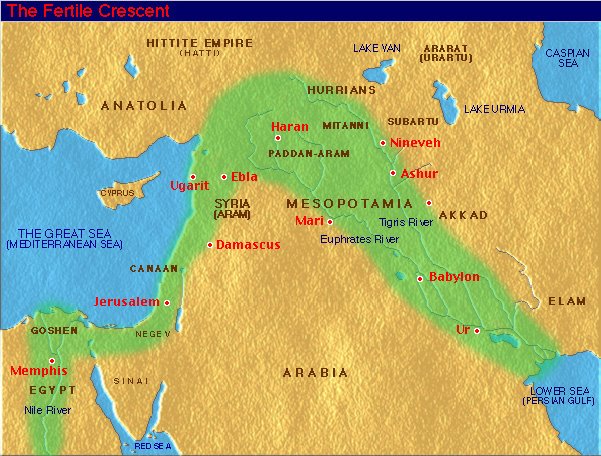
Peoples of the Fertile Crescent domesticated local plants much earlier. They domesticated far more species, domesticated far more productive or valuable species, domesticated a much wider range of types of crops, developed intessified food production and dense human popluations more rapidly, and as a result entered the modern world with more advanced technology, more complex political organization, and more epidemic diseases with which to infect other peoples.
From: Guns, Germs, and Steel by Jared Diamond
Fertile Crescent background info
The Fertile Crescent is a historical region in the Middle East incorporating Ancient Egypt, the Levant, and Mesopotamia. Watered by the Nile, Jordan, Euphrates and Tigris rivers and covering some 400-500,000 square kilometers, the region extends from the eastern shore of the Mediterranean Sea around the north of the Syrian Desert and through the Jazirah and Mesopotamia to the Persian Gulf. These areas correspond to the present-day Egypt, Israel, West Bank, Gaza strip, and Lebanon and parts of Jordan, Syria, Iraq, south-eastern Turkey and south-western Iran.
The Fertile Crescent has an impressive record of past human activity. As well as possessing many sites with the skeletal and cultural remains of both pre-modern and early modern humans , later Pleistocene hunter-gatherers and Epipalaeolithic semi-sedentary hunter-gatherers, this area is most famous for its sites related to the origins of agriculture. The western zone around the Jordan and upper Euphrates rivers gave rise to the first known Neolithic farming settlements, which date to around 9,000 BCE (and includes sites such as Jericho). This region, alongside Mesopotamia (which lies to the east of the Fertile Crescent, between the rivers Tigris and Euphrates), also saw the emergence of early complex societies during the succeeding Bronze Age. There is also early evidence from this region for writing, and the formation of state-level societies. This has earned the region the nickname "The Cradle of Civilization."
Since the Bronze Age, the region's natural fertility has been greatly extended by irrigation works, upon which much of its agricultural production continues to depend. The last two millennia have seen repeated cycles of decline and recovery as past works have fallen into disrepair through the replacement of states, to be replaced under their successors. Another ongoing problem has been salination -- the seepage of salt water into irrigated farmland.
As crucial as rivers were to the rise of civilization in the Fertile Crescent, they were not the only factor in the area's precocity. The Fertile Crescent had a climate which encouraged the evolution of many annual plants, which produce more edible seeds than perennials, and the region's dramatic variety of elevation gave rise to many species of edible plants for early experiments in cultivation. Most importantly, the Fertile Crescent possessed the wild progenitors of the eight Neolithic founder crops important in early agriculture (i.e. wild progenitors to emmer wheat, einkorn, barley, flax, chick pea, pea, lentil, bitter vetch), and four of the five most important species of domesticated animals - cows, goats, sheep, and pigs - and the fifth species, the horse, lived nearby.
Fertile Crescent: It is hedged in on all sides by natural borders: the sea on the west, arid wastelands in the centre and on the south, high mountains on the north and east. Its eastern and northern arm is known as Mesopotamia, the land of two rivers, the Tigris and the Euphrates. The upper Euphrates is at the apex of the Fertile Crescent While the Tigris is on its eastern edge. The Fertile Crescent south- western arm reaches Palestine. It is the poorest and smallest of all its countries but it has a very important role as a passage way to Egypt. It is the corridor between Egypt and the lands of the Fertile Crescent
From Wikipedia, the free encyclopedia
The Fertile Crescent has an impressive record of past human activity. As well as possessing many sites with the skeletal and cultural remains of both pre-modern and early modern humans , later Pleistocene hunter-gatherers and Epipalaeolithic semi-sedentary hunter-gatherers, this area is most famous for its sites related to the origins of agriculture. The western zone around the Jordan and upper Euphrates rivers gave rise to the first known Neolithic farming settlements, which date to around 9,000 BCE (and includes sites such as Jericho). This region, alongside Mesopotamia (which lies to the east of the Fertile Crescent, between the rivers Tigris and Euphrates), also saw the emergence of early complex societies during the succeeding Bronze Age. There is also early evidence from this region for writing, and the formation of state-level societies. This has earned the region the nickname "The Cradle of Civilization."
Since the Bronze Age, the region's natural fertility has been greatly extended by irrigation works, upon which much of its agricultural production continues to depend. The last two millennia have seen repeated cycles of decline and recovery as past works have fallen into disrepair through the replacement of states, to be replaced under their successors. Another ongoing problem has been salination -- the seepage of salt water into irrigated farmland.
As crucial as rivers were to the rise of civilization in the Fertile Crescent, they were not the only factor in the area's precocity. The Fertile Crescent had a climate which encouraged the evolution of many annual plants, which produce more edible seeds than perennials, and the region's dramatic variety of elevation gave rise to many species of edible plants for early experiments in cultivation. Most importantly, the Fertile Crescent possessed the wild progenitors of the eight Neolithic founder crops important in early agriculture (i.e. wild progenitors to emmer wheat, einkorn, barley, flax, chick pea, pea, lentil, bitter vetch), and four of the five most important species of domesticated animals - cows, goats, sheep, and pigs - and the fifth species, the horse, lived nearby.
Fertile Crescent: It is hedged in on all sides by natural borders: the sea on the west, arid wastelands in the centre and on the south, high mountains on the north and east. Its eastern and northern arm is known as Mesopotamia, the land of two rivers, the Tigris and the Euphrates. The upper Euphrates is at the apex of the Fertile Crescent While the Tigris is on its eastern edge. The Fertile Crescent south- western arm reaches Palestine. It is the poorest and smallest of all its countries but it has a very important role as a passage way to Egypt. It is the corridor between Egypt and the lands of the Fertile Crescent
From Wikipedia, the free encyclopedia
Fertile Crescent

I really like maps and charts. They show so many interesting things about a place, provide historical context and geogrpahic details. The Fertile Crescent is the place where we, the human race came from. Where we learned how to domesticate plants and animals.
Subscribe to:
Posts (Atom)