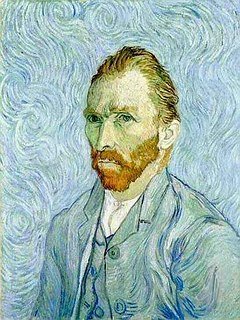
"The nomadic Bedouin does not dote on scenery, paint landscapes, or compile a nonutilitarian natural history... His life is so profoundly in transaction with nature that there is no place for abstraction or aesthetics or a "nature philosophy" which can be separated from the rest of his life... Nature and his relationship to it are a deadly-serious matter, prescribed by convention, muystery and danger. His personal leisure is aimed away from idle amusement or detached tampering with nature's processes. But built into his life is awareness of that presence, of the terrain, of the unpredictable weather, of the narrow margin by which he is sustained."
Paul Shepard (cultural ecologist)
Showing posts with label History. Show all posts
Showing posts with label History. Show all posts
Sunday, November 11, 2007


Saturday, September 15, 2007
Thought of the Day
Our belief is not a belief. Our principles are not faith. We do not rely solely upon science and reason, because these are necessary rather than sufficient factors, but we distrust anything that contradicts science or outrages reason. We may differ on many things, but what we respect is free inquiry, openmindedness, and the pursuit of ideas for their own sake... We are not immune to the lure of wonder and mystery and awe: we have music and art and literature, and find that the serious ethical dilemmas are better handled by Shakespeare and Tolstoy and Schiller and Dostoyevsky and George Elliot than in the mythical morality tales of the holy books. Literature, not scripture, sustains the mind and – since there is no other metaphor – also the soul. We do not believe in heaven or hell, yet no statistic will ever find that without these blandishments and threats we commit more crimes of greed or violence than the faithful. (In fact, if a proper statistical inquiry could ever be made, I am sure the evidence would be the other way.)... We are reconciled to living only once, except through our children, for whom we are perfectly happy to notice that we must make way, and room. We speculate that it is at least possible that, once people accepted the fact of their short struggling lives, they might behave better toward each other and not worse. We believe with certainty that an ethical life can be lived without religion. And we know for a fact the corollary holds true—that religion has caused innumerable people to not just to conduct themselves no better than others, but to award themselves permission to behave in ways that would make a brothel-keeper or an ethnic cleanser raise an eyebrow... There is no need for us to gather every day, or every seven days, or on any high and auspicious day, to proclaim our rectitude or to grovel and wallow in our unworthiness. We atheists do no require any priests, or any hierarchy above them, to police our doctrine. Sacrifices and ceremonies are abhorrent to us, as are relics and the worship of any images or objects. To us no spot on earth is or could be “holier” than another: to the ostentatious absurdity of the pilgrimage, or the plain horror of killing civilians in the name of some sacred wall or cave or shrine or rock, we can counterpose a leisurely or urgent walk from one side of the library or the gallery to another, or to lunch with an agreeable friend, in pursuit of truth or beauty.
Christopher Hitchens
God is Not Great: How Religion Poisons Everything
Christopher Hitchens
God is Not Great: How Religion Poisons Everything
Tuesday, July 24, 2007
Locke on Human Understanding
The acts of the mind, wherein it exerts its power over simple ideas, are chiefly these three:
1. Combining several simple ideas into one compound one, and thus all complex ideas are made.
2. The second is bringing two ideas, whether simple or complex, together, and setting them by one another so as to take a view of them at once, without uniting them into one, by which it gets all its ideas of relations.
3. The third is separating them from all other ideas that accompany them in their real existence: this is called abstraction, and thus all its general ideas are made.
John Locke,
An Essay Concerning Human Understanding (1690)
1. Combining several simple ideas into one compound one, and thus all complex ideas are made.
2. The second is bringing two ideas, whether simple or complex, together, and setting them by one another so as to take a view of them at once, without uniting them into one, by which it gets all its ideas of relations.
3. The third is separating them from all other ideas that accompany them in their real existence: this is called abstraction, and thus all its general ideas are made.
John Locke,
An Essay Concerning Human Understanding (1690)
Friday, July 20, 2007
Rich History of Kuwait
For a nation that has only come to the modern world’s attention since the discovery of petroleum, Kuwait has had a rich and diverse history. Archeologists have discovered chipped flint tools from 10,000 years ago, indicating that Stone Age people ranged through the area. A site in Sabbiya on the north shore of Kuwait Bay has yielded evidence of the oldest proper settlement in the region, dating to 4500 BC. Pottery fragments, knives, and beads found there indicate that the site was used by Ubaid settlers, the same people who populated ancient Mesopotamia. This means that the earliest settlers of Kuwait were cousins of the Sumerians, who developed the first recorded human civilization.
Two millennia later, the Dilmun Empire dominated the Arabian Gulf region from its capital in Bahrain. This maritime trading civilization flourished between 2300 and 1100 BC, and had settlements in Failaka, the island 20 kilometers from the southern promontory of Kuwait Bay. Archeologists have uncovered a complete Dilmun town there, including dwellings, public buildings, granaries, and a temple dedicated to the god Inzak. These are some of the best structural remains on earth from the Bronze Age.
Later the Greeks, the greatest seafarers of their time, plied the waters of the Gulf. Strabo, Pliny the Elder, and Dionysios all referred to island settlements there. The historian Arrian, in particular, mentioned an island discovered by one of Alexander the Great’s admirals on his way to India. He called the island “Ikaros” after a Greek island, and the Greeks established a significant trading post and temple on it.
In 1958, archeologists began to uncover a wealth of historical treasure and information, proving that Failaka was the Hellenistic Ikaros. Excavations have unearthed evidence of an extensive settlement that thrived between the 3rd and 1st Centuries BC There are ruins of dwellings, pavement, fortifications, and temples dedicated to Artemis and Apollo constructed of oolitic limestone from the Arabian mainland. Diggers also discovered hoards of silver Greek coins, terra cotta figurines and molds, busts in the classical tradition, and decorative reliefs.
Of particular interest was an inscribed stele in front of one of the temples. The inscription consisted of directives and messages to the inhabitants of Ikaros. Though it was linguistically difficult and partially destroyed, the reconstructed text has provided valuable information about the history, economy, politics, religion, and jurisprudence of Hellenistic colonial settlements.
While the Greeks were using the Gulf as a highway from Mesopotamia to India, Arab nomads were wandering the Arabian Peninsula and migrating eastward during the hot seasons. As Arab civilization began to thrive, commerce between Yemen in the south and Baghdad and Damascus in the north began to center on the Gulf. What is now Kuwait City, situated strategically at the tip of the Gulf and having one of its two natural harbors, began to play a key role in this trade of frankincense, myrrh, dates, pearls, gems, spices, and fabrics. As the centuries passed, goods from as far as India, China, and Africa were shipped via the port. When Islam swept the Arabian peninsula and beyond, Kuwait also became important as an east-west caravan stop on pilgrimages to Mecca.
Greek column on Failaka
visit http://1website.com/c_t1_index/c_t1_index.html for the rest of this story and more interesting things about Kuwait.
Two millennia later, the Dilmun Empire dominated the Arabian Gulf region from its capital in Bahrain. This maritime trading civilization flourished between 2300 and 1100 BC, and had settlements in Failaka, the island 20 kilometers from the southern promontory of Kuwait Bay. Archeologists have uncovered a complete Dilmun town there, including dwellings, public buildings, granaries, and a temple dedicated to the god Inzak. These are some of the best structural remains on earth from the Bronze Age.
Later the Greeks, the greatest seafarers of their time, plied the waters of the Gulf. Strabo, Pliny the Elder, and Dionysios all referred to island settlements there. The historian Arrian, in particular, mentioned an island discovered by one of Alexander the Great’s admirals on his way to India. He called the island “Ikaros” after a Greek island, and the Greeks established a significant trading post and temple on it.
In 1958, archeologists began to uncover a wealth of historical treasure and information, proving that Failaka was the Hellenistic Ikaros. Excavations have unearthed evidence of an extensive settlement that thrived between the 3rd and 1st Centuries BC There are ruins of dwellings, pavement, fortifications, and temples dedicated to Artemis and Apollo constructed of oolitic limestone from the Arabian mainland. Diggers also discovered hoards of silver Greek coins, terra cotta figurines and molds, busts in the classical tradition, and decorative reliefs.
Of particular interest was an inscribed stele in front of one of the temples. The inscription consisted of directives and messages to the inhabitants of Ikaros. Though it was linguistically difficult and partially destroyed, the reconstructed text has provided valuable information about the history, economy, politics, religion, and jurisprudence of Hellenistic colonial settlements.
While the Greeks were using the Gulf as a highway from Mesopotamia to India, Arab nomads were wandering the Arabian Peninsula and migrating eastward during the hot seasons. As Arab civilization began to thrive, commerce between Yemen in the south and Baghdad and Damascus in the north began to center on the Gulf. What is now Kuwait City, situated strategically at the tip of the Gulf and having one of its two natural harbors, began to play a key role in this trade of frankincense, myrrh, dates, pearls, gems, spices, and fabrics. As the centuries passed, goods from as far as India, China, and Africa were shipped via the port. When Islam swept the Arabian peninsula and beyond, Kuwait also became important as an east-west caravan stop on pilgrimages to Mecca.
Greek column on Failaka
visit http://1website.com/c_t1_index/c_t1_index.html for the rest of this story and more interesting things about Kuwait.
Sunday, June 17, 2007
Assassins' Gate
I just finished reading "The Assassins' Gate - America in Iraq" by George Packer. Excellent read which gives insights into the indivdual human side of the war and it's aftermath in Iraq. It also begins to examine the historical context of the war and the lead up to its execution and what may happen next. From my perspective I hope that America moves back and let's the Iraqis begin nation building. Our role should be to provide the protection to give them the chance to do it on their own terms. We need to keep Iran, Saudia Arabia, Syria and others at arms length. Let's hope they can survive religion.
Thursday, May 31, 2007
The Philosopher of Islamic Terror
The New York Times
March 23, 2003
The Philosopher of Islamic Terror
By PAUL BERMAN
March 23, 2003
The Philosopher of Islamic Terror
By PAUL BERMAN
Thursday, May 24, 2007
Arabic Alphabet
The Arabic alphabet is the script used for writing languages such as Arabic, Persian, Urdu, and others.
The alphabet was first used to write texts in Arabic -- most importantly, the Qur'an, the holy book of Islam. With the spread of Islam, it came to be used to write many other languages, even outside of the Semitic family to which Arabic belongs. Examples of non-Semitic languages written with the Arabic alphabet include Persian, Urdu, Malay, Azerbaijani (in Iran) and Kurdish in Iraq and Iran. In order to accommodate the needs of these other languages, new letters and other symbols were added to the original alphabet.
The special Abjadī order (or two slightly variant orders) was devised by matching an Arabic letter of the fully consonant-dotted 28-letter Arabic alphabet to each of the 22 letters of the Aramaic alphabet (in their old Phoenician alphabetic order) — leaving six remaining Arabic letters at the end.

Friday, May 04, 2007
NPR : Sayyid Qutb's America
This is a must read article NPR : Sayyid Qutb's America
"Qutb's writings would later become the theoretical basis for many radical Islamic groups of today -- including al Qaeda. Qutb increasingly saw the redemption of Egypt in the application of Islamic law."
"Qutb's writings would later become the theoretical basis for many radical Islamic groups of today -- including al Qaeda. Qutb increasingly saw the redemption of Egypt in the application of Islamic law."
Sunday, April 22, 2007
Charter 91
First undertaken by the Iraq Foundation in 1991, the Charter 91 project is equivalent to an Iraqi "Bill of Rights." It is a document formulated by Iraqis to express their fundamental values and aspirations for Iraq's future. It was and continues to be a signature-gathering campaign. In 1992,and again in 1994, the Iraq Foundation published multi-lingual additions of Charter 91, including Arabic, English, Kurdish, Assyrian and Turkoman texts of the Charter, as well as the names of the signatories at the time of publication. Copies of the multilingual, second edition are available from the Iraq Foundation.
Here is a link to The Iraq Foundation which has a copy: http://www.iraqfoundation.org/projects/pubs/charter91.html
How does this compare to the suggestions for what America should do in Iraq which are published in the Iraq Study Group Report (a link is in an earlier post of mine if you are interested)
Here is a link to The Iraq Foundation which has a copy: http://www.iraqfoundation.org/projects/pubs/charter91.html
How does this compare to the suggestions for what America should do in Iraq which are published in the Iraq Study Group Report (a link is in an earlier post of mine if you are interested)
Sunday, April 08, 2007
Knowledge
When rational people have complete knowledge of a situation they can make better decisions. Of course not all people are rational. But knowledge is available for the seeker. Just google any subject or visit wikipedia. One problem we humans have is waiting to gather and analyze knowledge before we act. If our decision makers had complete knowledge would I be here in Kuwait? Would Iran have captured the British sailors? Would America be in Iraq and Afghanistan? I wonder. And I continue to seek complete knowledge.
Saturday, March 17, 2007
Good Book - Afghanistan
I just finished reading "The Places in Between" by Rory Stewart. It is a book about the authors walk across Afghanistan, from Herat to Kabul. A very good book that I can recommend to those interested in the life and history of people in Aghanistan. The authur begins his walk across Afghanistan just after the Taliban are removed from power in 2002, note they are trying to regain that power back now. An easy read and gives good insights into the daily lives of the locals. The Islamic tradition of support to the traveler is impressive. I wonder how many other people would take you in if you were walking across thier country and knocked on the door at night and asked for food and a place to sleep.
Saturday, January 13, 2007
Return to Kuwait
So I am still suffering from jet lag. Returned to Kuwait yesterday from back home. About 16 hours of flight time, 6 hours of layover and two airplanes and I'm back. Ofcourse I found out today that I will be heading off to Bahrain in a little over a week. No rest for the weary.
I started another Great Course today titled "The United States and the Middle East - 1914 to 9/11" which is very interesting. But one of the books I am reading now about the Middle East, "A Peace to End All Peace" tells the story of how the current configuration of the Middle East was mainly determined from 1914 to 1922 as a result of the British, French and Russian plans carried out during that period as result of the fall of the Ottoman Empire.
On the plane I began reading the Iraq Study Group Report which has some interesting and very relavant recommendations for the future of Iraq and the Middle East in general. The more I learn about the Middle East the more interesting it becomes and the more the daily news makes sense to me.
I started another Great Course today titled "The United States and the Middle East - 1914 to 9/11" which is very interesting. But one of the books I am reading now about the Middle East, "A Peace to End All Peace" tells the story of how the current configuration of the Middle East was mainly determined from 1914 to 1922 as a result of the British, French and Russian plans carried out during that period as result of the fall of the Ottoman Empire.
On the plane I began reading the Iraq Study Group Report which has some interesting and very relavant recommendations for the future of Iraq and the Middle East in general. The more I learn about the Middle East the more interesting it becomes and the more the daily news makes sense to me.
Monday, January 08, 2007
Al Warka Google Map
Al Warka' google map Great map of Uruk (aka Al Warka) that you can zoom in on to see where Uruk is in Iraq.
Uruk Background
Check here for some more info on Uruk to include some photos of the ancient Sumer site - http://ancientneareast.tripod.com/Sumer.html
Uruk now Warka
"In the Early Dynastic I period the city of Uruk covered an area of 400 hectares and was surrounded by a city wall, which according to later accounts was built by Gilgamesh, Uruk's legendary king. Uruk remained an important religious center and its shrines were embellished by many of the later rulers of Mesopotamia.....The modern name of Uruk is Warka and it was recorded in the Bible as the town of Erech. In the Sumerian period it was called Unu..." Source http://www.mystae.com/restricted/streams/vela/uruk.html
Saturday, January 06, 2007
Uruk, Mesopotamia
In the 5th Millennium B.C. the city of Uruk, 140 miles south of Baghdad was in fact the first city. Uruk's people where the first to live the urban lifestyle. Uruk was the first city think of that. The first time in human history that people come together and cooperated so that larger numbers of us could live side by side. Where one persons skills made it possible for anothr person to build specialized skills in another area. What happened over time so that now we want to kill each other rather than work together and build better cities?
Tuesday, January 02, 2007
Empathy
What makes us human? The ability to feel empathy for another human begin. To see life from the other persons perspective. What if we all took some time to see the world from the other persons point of view? To understand their world view. World views can be based on fact or faith, each valid, each resulting in very different perspectives. Each leading to very different courses of action. What makes us human? Empathy is on attribute to consider.
Monday, January 01, 2007
The Levant Region

The Levant is an imprecise geographical term historically referring to a large area in the Middle East south of the Taurus Mountains, bounded by the Mediterranean Sea on the west, and by the northern Arabian Desert and Upper Mesopotamia to the east. The Levant does not include the Caucasus Mountains, any part of the Arabian Peninsula proper, or Anatolia — although at times Cilicia may be included. The Sinai Peninsula may also be included, but may be excluded as a marginal area forming a land bridge between the Levant and northern Egypt. At times Levantine cultures and peoples dominated the region between the Sinai and the Nile river, but that region is usually excluded from the geographical Levant.
What Makes Us Human?
What makes us human? Philosophers have been asking this question for thousands of years. Written and spoken language, tool making and other capabilities have been offered as answers to this question, what makes us human? Recently evolutionary biologists have found a gene which seems to have evolved about 6,000 years ago, again we are back to the Fertile Cresent area. This gene seems to be responsible for our large brains and its growth. We all know that as a percentage of body mass humans have a large brain to body ratio. So all of this leads me back to what I have been saying for a long time, lets focus on what makes us the same, what makes us human, not on what makes us different. So what makes us human?
Monday, November 27, 2006
Brief History
I am reading "The Middle East" A brief history of the last 2,000 years by Bernard Lewis. Of particular interest is the section on the period of the Crusades. A discussion of a period about 1184 when Jerusalem was a city where Musims and Christians lived together is of interest to me since it is coverd by the movie by Ridely Scott called the "Kingdom of Heaven" Even during this period the Sunnis and Shites were fighting between themselves. It seems from what I have read so far in the book the Muslims have a long history of internal fighting within the Islam religion.
Subscribe to:
Posts (Atom)